Cosmic Dinosaurs of the Early Universe: James Webb Space Telescope’s "Little Red Dots" May Be Evolving into Familiar Globular Clusters

Paleontologists have long understood that many of Earth’s dinosaurs did not face an abrupt extinction but instead underwent a remarkable evolutionary transformation, giving rise to the diverse avian life we see today. Now, groundbreaking research utilizing the James Webb Space Telescope (JWST) suggests a similar evolutionary narrative might be unfolding in the cosmos. Astronomers are proposing that enigmatic "cosmic dinosaurs" – observed as faint, distant "Little Red Dots" – may not have vanished but could be the nascent stages of familiar astronomical structures: vast, ancient collections of stars known as globular clusters.
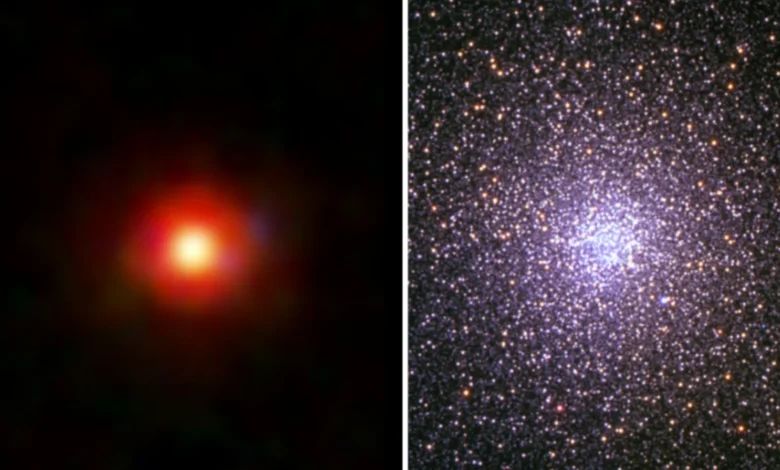
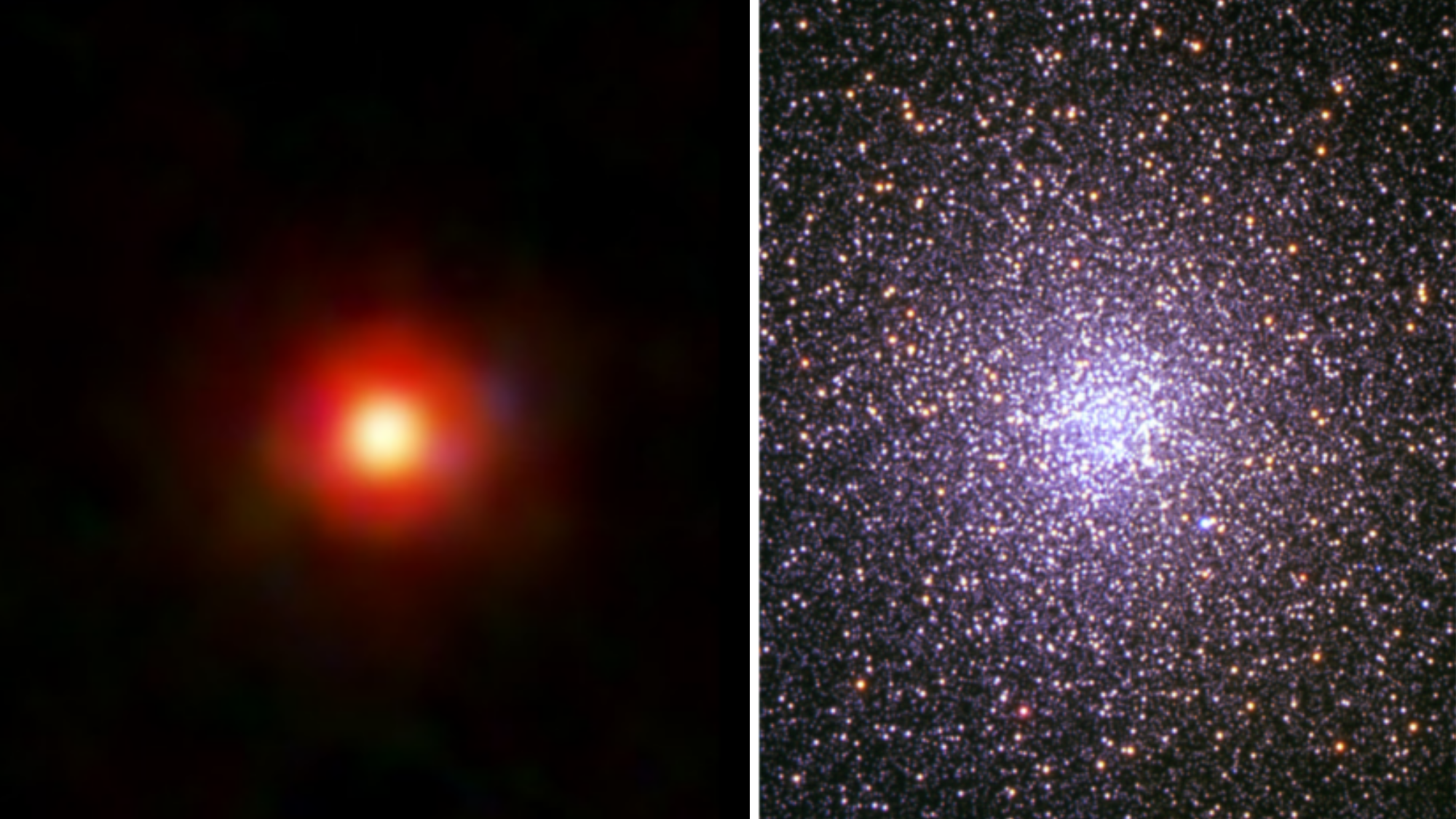
The discovery of these "Little Red Dots" by the JWST in 2022 presented a significant puzzle for astrophysicists. These objects were detected in abundance roughly 600 million years after the Big Bang, a period when the universe was still in its infancy. However, they appeared to disappear from observations as the cosmos matured, vanishing before the universe reached an age of approximately 2 billion years. This apparent disappearance sparked a flurry of hypotheses, ranging from the exotic possibility of "black hole stars" – black holes cloaked in dense shells of gas and dust – to more conventional, yet still intriguing, explanations.
The latest research, led by John Chisholm of the University of Texas Austin, introduces a compelling new theory: that these Little Red Dots are not ephemeral phenomena but are instead the embryonic forms of globular clusters. Their hypothesis posits that a forming globular cluster, particularly one at its heart containing a supermassive star, would possess characteristics strikingly similar to those observed in the Little Red Dots.
"These may not be just a strange new JWST population with no connection to the universe around us today," Chisholm stated in a press release. "Instead, Little Red Dots may persist past the early universe, evolving into something relatively familiar. Little Red Dots could be galaxies, they could involve black holes, or they could be something even more unexpected. Our work shows that forming globular clusters with supermassive stars should be part of that conversation."
A Glimpse into Cosmic Infancy: The Enigma of the Little Red Dots
The early universe, a mere fraction of its current age, was a vastly different place. Following the Big Bang, the cosmos was primarily composed of hydrogen and helium, with only trace amounts of heavier elements. It was within this primordial soup that the very first stars and galaxies began to form. The JWST, with its unparalleled sensitivity to infrared light, has provided astronomers with an unprecedented view of this epoch, allowing them to observe celestial objects that existed billions of years ago.
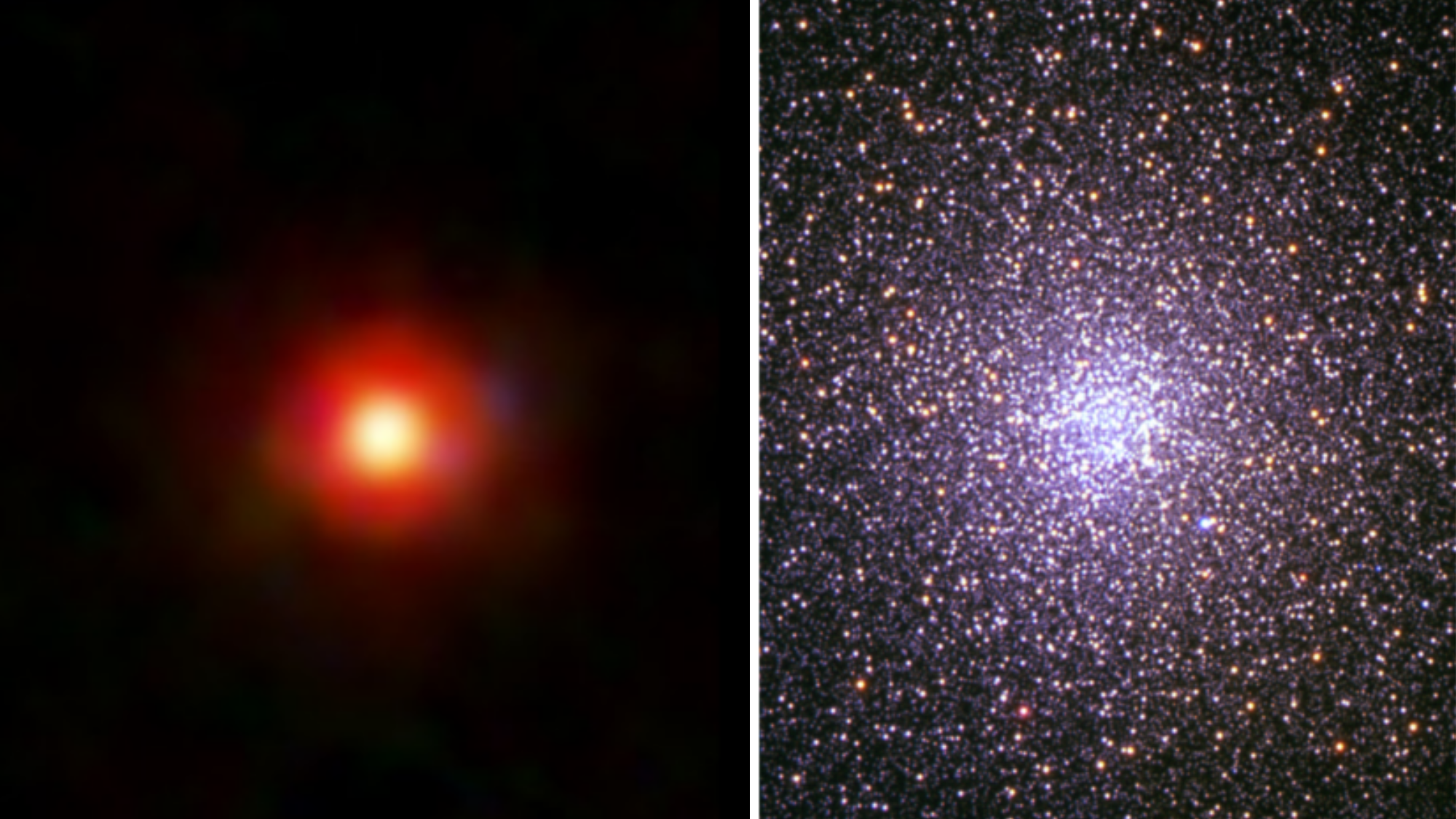
The "Little Red Dots" observed by JWST were characterized by their distinct red hue, indicating they were significantly redshifted, a phenomenon caused by the expansion of the universe stretching the wavelengths of light emitted by distant objects. Their sheer number and their apparent disappearance from later epochs made them a tantalizing mystery. Scientists scrambled to identify what these objects could be, considering various possibilities that could explain their observed properties and their apparent vanishing act.
From Cosmic Seedlings to Stellar Cities: The Evolution of Globular Clusters
Globular clusters are among the oldest and most massive structures in the universe. These spherical collections of stars, numbering from tens of thousands to millions, are densely packed and orbit the centers of galaxies. Our own Milky Way galaxy hosts at least 150 known globular clusters, each a testament to the early star-forming processes of the universe.
Despite their familiarity, the precise mechanisms by which globular clusters form remain a subject of ongoing research. Traditionally, astronomers have studied them as they appear in the present day, after billions of years of cosmic evolution. This evolutionary journey involves the dissipation of gas, the aging and death of massive stars, and gravitational interactions that reshape their structure and mass. These processes make it challenging to reconstruct the initial conditions under which they were born.
"We usually see them [globular clusters] after billions of years of evolution, at a time when their massive stars are gone, their gas has been cleared out, and dynamical processes have changed their masses and structures," explained team member Danielle Berg of UT Austin. "That makes it very hard to reconstruct the original conditions they formed in."
The Supermassive Star Hypothesis: A Key to Unlocking Early Star Formation
The new research proposes that the peculiar chemical composition of stars within globular clusters offers a crucial clue to their formation. It has been observed that many stars in these ancient clusters exhibit an unusual abundance of helium and certain heavier elements like nitrogen, sodium, and aluminum, while being deficient in elements such as carbon, oxygen, and magnesium. This specific elemental signature suggests a unique and intense stellar nucleosynthesis process.
"This specific pattern indicates nuclear fusion at very high temperatures, much higher than in the cores of even massive normal stars," stated team member Mike Boylan-Kolchin of UT Austin. "A supermassive star is precisely the kind of environment that could produce this combination."
Supermassive stars, hypothetical celestial bodies with masses ranging from 1,000 to 10,000 times that of our Sun, are theorized to have existed in the early universe. In the dense environments of nascent globular clusters, where stellar collisions and mergers would have been frequent, the formation of such colossal stars is considered plausible. These supermassive stars would have been incredibly short-lived, burning through their nuclear fuel in mere millions of years – a cosmic blink of an eye compared to the billions of years of a star like our Sun.
However, their brief existence would have been sufficient to forge the unique blend of elements observed in globular clusters. When these titans eventually met their end in cataclysmic supernova explosions, they would have dispersed these newly synthesized elements into their surroundings. This enriched material would then have served as the feedstock for the subsequent generations of stars that comprise the observed globular clusters, imbuing them with their distinctive chemical fingerprints.
Bridging the Gap: Linking Little Red Dots and Modern Structures
The hypothesis that Little Red Dots are evolving globular clusters is supported by several key observations:
- Chemical Signatures: The unusual elemental abundances found in stars within globular clusters are consistent with the products of nucleosynthesis within supermassive stars, as proposed in the Little Red Dot model.
- Mass Estimates: Theoretical models suggest that the estimated masses of Little Red Dots align with the expected masses of forming globular clusters. As these early structures evolve, their mass distribution could naturally lead to the masses observed in present-day globular clusters.
- Timing: The appearance of Little Red Dots around 600 million years after the Big Bang coincides with the estimated epoch of early globular cluster formation. This temporal correlation strengthens the proposed evolutionary link.
- Distribution: The observed spatial distribution of Little Red Dots in the early universe appears to mirror the distribution patterns of globular clusters in the contemporary cosmos.
"In our model, the supermassive star that helps to make the object look like a Little Red Dot would live for only a short time," Chisholm elaborated. "Once that star dies, the object may no longer look like a Little Red Dot, even if the cluster itself survives billions of years." This explains why these objects are seen in the early universe but not in later epochs, suggesting a transformation rather than an extinction.
Implications for Our Understanding of Cosmic Evolution

If confirmed, this research could profoundly impact our understanding of galaxy formation and the evolution of stellar populations. It suggests that the processes that shaped the early universe were capable of forming massive structures that have endured to the present day, albeit in a transformed state.
The existence of supermassive stars in the early universe, a key component of this theory, would also provide valuable insights into the conditions of star formation shortly after the Big Bang. It challenges previous assumptions about the typical mass ranges of stars in that era and highlights the dynamic and extreme nature of early cosmic environments.
"There’s no single smoking gun at this point that says Little Red Dots are globular clusters, but it would explain a lot of diverse and surprising observations," commented Boylan-Kolchin. The research team acknowledges that further observations and theoretical modeling are necessary to definitively confirm their hypothesis. However, the convergence of evidence from JWST observations and theoretical astrophysics provides a compelling case for this evolutionary link.
This study is currently available as a pre-print on the academic repository arXiv, where it awaits peer review and further scrutiny from the scientific community. The ongoing exploration of the universe by the JWST continues to unveil the cosmos’s ancient secrets, suggesting that even the most puzzling cosmic phenomena might have a familiar, albeit evolved, counterpart in the universe we observe today. The "cosmic dinosaurs" of the early universe, it seems, may have gracefully transformed into the ancient stellar cities that grace our modern night sky.