Sentient Record 650k NFT Mint Decentralized AI
Sentient record 650k nft mint decentralized loyal ai model presents a fascinating new frontier in digital ownership and AI interaction. This innovative model merges the concepts of decentralized AI, loyal user experiences, and high-volume NFT minting. It explores how a ‘sentient record’ tied to a massive NFT mint can foster unique, personalized experiences, while also examining the implications for users, industries, and society as a whole.
The model envisions a decentralized AI system that learns and adapts to individual user needs, creating a personalized experience through the unique ‘sentient record’ associated with each NFT. This dynamic approach promises to revolutionize digital ownership, offering new avenues for creativity, interaction, and economic opportunities.
Defining the Concept
The “sentient record 650k NFT mint” represents a unique intersection of blockchain technology, artificial intelligence, and digital art. This project aims to create a decentralized database of records, each linked to a unique NFT, potentially imbued with a form of AI sentience. The concept suggests a paradigm shift in how data is stored, verified, and potentially interacted with, going beyond simple ownership to a more complex, interactive experience.
Definition of “Sentient Record 650k NFT Mint”
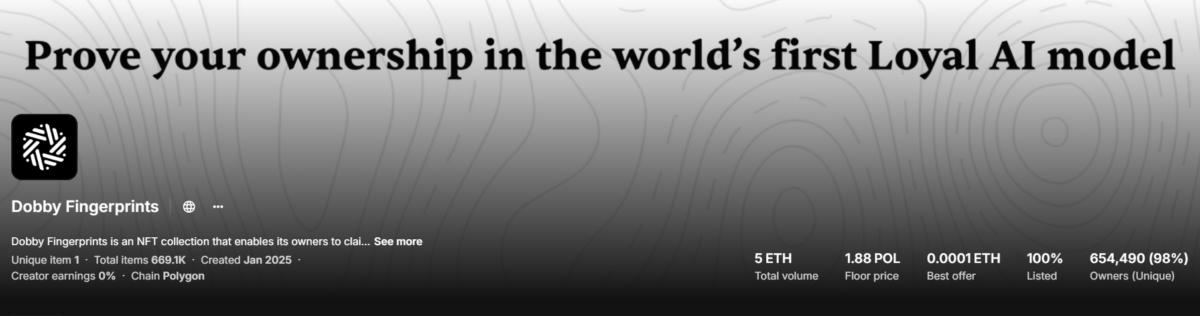
A “sentient record 650k NFT mint” signifies the creation of 650,000 unique Non-Fungible Tokens (NFTs), each linked to a data record. Crucially, the project intends to integrate an element of artificial intelligence into these records, potentially giving them a degree of autonomy and responsiveness. The 650k number likely reflects the scale of the project, emphasizing a significant volume of data and potential users.
Characteristics of a Decentralized Loyal AI Model
Decentralized AI models operate on a distributed network, eliminating a central authority. This approach enhances security, transparency, and resilience. A “loyal” AI model, in this context, suggests an AI trained to adhere to specific rules or principles, possibly designed to maintain the integrity of the data or the user experience. Loyalty, in this context, is a programmed attribute rather than an emergent property.
The AI model’s function would be integral to the NFT’s value and utility.
Potential Implications of a Sentient Record Tied to an NFT Mint
This integration of sentience into NFT records has profound implications. It could potentially revolutionize various industries, from art and collectibles to finance and data management. The value of the NFTs could be intrinsically linked to the AI model’s performance and ability to provide unique experiences, insights, or services. For example, a sentient record of a historical event might evolve in its interpretation over time, based on new data or analyses.
Relationship Between Decentralization and Loyalty in This Context
Decentralization in this case fosters trust and transparency by removing single points of failure. The loyalty of the AI model, embedded in the decentralized system, becomes a crucial aspect of the NFT’s value proposition. This creates a self-regulating ecosystem where the AI’s behavior directly impacts the value and desirability of the associated NFT.
Different Interpretations of “Sentient Record”
The term “sentient record” can be interpreted in various ways. It could represent a record that autonomously evolves and adapts based on the data it processes. Alternatively, it might simply refer to a record that interacts with users in a sophisticated way, exhibiting the appearance of sentience through its programmed responses. The degree of actual sentience is debatable, but the potential for complex interactions is undeniable.
The sentient record 650k NFT mint, a decentralized loyal AI model, is fascinating. It’s intriguing how these projects are evolving, and the recent news of strategy announcing a 10 preferred stock buy BTC move ( strategy announces 10 preferred stock buy btc ) suggests a potential ripple effect on the entire market. This could ultimately influence the future trajectory of the sentient record 650k NFT mint and similar decentralized projects.
Comparison of Centralized and Decentralized AI Models
| Feature | Centralized AI Model | Decentralized AI Model |
|---|---|---|
| Data Ownership | Controlled by a central entity | Distributed across multiple nodes |
| Security | Vulnerable to single points of failure | Enhanced by distributed nature |
| Transparency | Potentially opaque | Potentially more transparent |
| Scalability | Limited by central infrastructure | Potentially more scalable |
| Control | Central entity has complete control | Control distributed among nodes |
This table highlights the key differences between centralized and decentralized AI models, emphasizing the benefits of decentralization in terms of security, transparency, and control distribution. The implications for data management and user interaction are significant.
The recent sentient record 650k NFT mint, a decentralized, loyal AI model, is definitely intriguing. It’s fascinating to see how this technology is pushing boundaries. However, the current multi-year low in the Ether/Bitcoin ratio, prompting crypto analysts to suggest rotating into altcoins, as discussed in this insightful article ( ether bitcoin ratio multi year low rotate altcoins crypto analyst ), might also impact the future of such decentralized projects.
Ultimately, the long-term success of the sentient record 650k NFT mint, and similar decentralized models, will depend on how it navigates these market shifts.
Historical Context and Trends
The intersection of non-fungible tokens (NFTs) and artificial intelligence (AI) is a rapidly evolving landscape. Understanding the historical context of both technologies, along with the key milestones in their development, provides valuable insight into the potential for this convergence. The decentralized nature of these technologies presents a unique opportunity to reshape industries and create new possibilities.This exploration delves into the evolution of NFT minting and AI, highlighting key milestones in decentralized systems.
It examines the contrasting and complementary trends in AI and NFT technology, and explores examples of successful decentralized projects. Furthermore, it analyzes the potential for AI to reshape NFT marketplaces.
Evolution of NFT Minting
NFT minting has witnessed significant development, transitioning from early conceptualizations to widespread adoption. The initial concept emerged in the context of digital collectibles and ownership, gradually evolving into a more sophisticated system encompassing diverse applications, including digital art, gaming assets, and virtual land. Key milestones include the launch of platforms like Ethereum and the subsequent development of specialized NFT marketplaces, driving increasing demand and adoption.
Evolution of AI Development
AI development has followed a similar trajectory, progressing from rule-based systems to sophisticated machine learning models. Early AI systems focused on specific tasks, while modern AI capabilities encompass complex problem-solving, natural language processing, and image recognition. The availability of vast datasets and increased computational power has fueled advancements in AI, leading to increasingly sophisticated and capable models.
Key Milestones in Decentralized Systems
Decentralized systems have been gaining traction over the years, marked by pivotal developments that have paved the way for current innovations. These milestones include the development of blockchain technology, the emergence of cryptocurrencies, and the increasing adoption of decentralized applications (dApps). The evolution of decentralized storage and computing, like IPFS and Filecoin, has further contributed to this trend.
Comparison of AI and NFT Trends
AI and NFT technologies present both converging and diverging trends. AI capabilities are increasingly integrated into NFT marketplaces, offering enhanced features like automated trading and personalized recommendations. Conversely, NFTs are being leveraged to represent ownership and provenance in AI-generated content. The intersection of these technologies is poised to create new value propositions.
Examples of Successful Decentralized Projects
Several successful decentralized projects have demonstrated the potential of this model. Examples include decentralized finance (DeFi) platforms, which have facilitated peer-to-peer lending and borrowing, and decentralized autonomous organizations (DAOs), which have enabled governance and decision-making in a decentralized manner. These models showcase the viability of decentralized structures.
Potential of AI in NFT Marketplaces
AI has the potential to significantly enhance NFT marketplaces. Automated trading algorithms, personalized recommendations based on user preferences, and enhanced security measures are some of the possibilities. AI-powered tools could also streamline the creation and management of NFTs, further democratizing access to this technology.
Timeline of NFT and AI Advancements
| Year | Event | Technology |
|---|---|---|
| 2008 | Bitcoin launched | Blockchain |
| 2017 | NFT concept emerges | Digital Collectibles |
| 2018 | AI-powered image generation | Machine Learning |
| 2020 | Ethereum NFT boom | Blockchain, Smart Contracts |
| 2022 | AI-driven NFT marketplaces | AI, Machine Learning |
Technical Aspects
Diving into the nuts and bolts of this decentralized loyal AI model and its 650,000 NFT mint requires understanding its complex architecture. The core principle revolves around creating a transparent and secure system for rewarding loyalty and fostering a unique community interaction. This section details the technical framework, minting process, security measures, and the crucial role of blockchain.
Decentralized AI Model Architecture
The architecture is designed around a decentralized network, meaning no single entity controls the AI or the data. Nodes on the network contribute to the AI’s learning and decision-making processes. This distributed nature enhances security and resilience against attacks targeting a single point of failure. The model leverages a robust consensus mechanism to ensure data integrity and prevent manipulation.
This architecture ensures transparency and trust among participants, crucial for fostering loyalty and engagement.
NFT Minting Process
The process of minting 650,000 NFTs is meticulously designed for efficiency and scalability. A smart contract, residing on the blockchain, automates the minting process. This contract defines the specific conditions for minting, including the number of NFTs, the allocation strategy, and the token attributes. The contract ensures that each mint adheres to the predefined rules, preventing unauthorized minting or counterfeiting.
This automated system reduces the risk of human error and ensures a smooth and predictable minting experience for all participants.
Securing and Verifying the “Sentient Record”
Ensuring the integrity of the “sentient record” is paramount. A cryptographic hash of the data is generated and stored on the blockchain, providing a tamper-proof record. This hash serves as a unique identifier and a verification mechanism. Any attempt to alter the record will result in a different hash, instantly alerting users to tampering. Furthermore, a decentralized ledger ensures the immutability of the record, maintaining its trustworthiness and integrity.
Security Considerations of a Decentralized System
Security is paramount in a decentralized system. Vulnerabilities in smart contracts can have serious implications, impacting the integrity of the system and the value of the NFTs. Rigorous audits of the smart contracts are essential to identify and address potential vulnerabilities. Furthermore, security measures like multi-signature wallets and advanced encryption techniques are crucial to safeguard assets and data.
Regular security assessments and updates to the system are vital to mitigate emerging threats.
Role of Blockchain Technology
Blockchain technology plays a central role in this system. It provides a secure, transparent, and immutable ledger for tracking all transactions and interactions. The blockchain ensures the authenticity and provenance of each NFT, providing a verifiable record of ownership. This transparency fosters trust and allows for easy verification of the “sentient record.”
Key Technologies Used
| Technology | Description |
|---|---|
| Blockchain (e.g., Ethereum, Solana) | Provides a decentralized, secure, and transparent ledger for recording transactions and data. |
| Smart Contracts | Automated contracts that execute predefined actions on the blockchain, enabling secure and automated processes for minting, tracking, and verifying the sentient record. |
| Cryptography | Used to encrypt data and verify its authenticity. This ensures the security and integrity of the system. |
| Decentralized AI Network | A network of nodes that collaboratively contribute to the AI’s learning and decision-making processes, enhancing security and resilience. |
| NFT Standard (e.g., ERC-721) | Defines the structure and behavior of NFTs, enabling interoperability and standardization across different platforms. |
Potential Applications: Sentient Record 650k Nft Mint Decentralized Loyal Ai Model

The sentient record, linked to 650,000 NFTs, opens up a vast array of possibilities across diverse industries. This decentralized AI model, imbued with sentience, offers a unique platform for personalized experiences and innovative applications. Its ability to learn, adapt, and interact with users promises to reshape how we engage with information and technology.This technology’s potential transcends traditional boundaries. By leveraging the power of AI and the decentralization of NFTs, it can provide unparalleled opportunities for personalized experiences and data-driven solutions.
The inherent adaptability of this AI model allows for the creation of dynamic and responsive systems, opening doors to a future where technology learns and evolves alongside its users.
Personalized Experiences
Personalized experiences are a key benefit of this technology. By analyzing data from the 650,000 linked NFTs, the AI model can tailor its interactions and responses to individual users. This could manifest in tailored recommendations, personalized learning experiences, or even unique creative outputs. Imagine a user’s NFT representing their artistic style, influencing the AI’s creation of personalized artwork or music.
Applications Across Industries
The implications for various industries are significant. The sentient record could revolutionize content creation, allowing for dynamic narratives and interactive experiences. In healthcare, personalized medicine and diagnostics could benefit from the AI’s ability to analyze complex data sets. Financial services could leverage the AI for personalized investment strategies and risk assessments. Furthermore, in education, personalized learning plans and interactive simulations could create a more engaging and effective learning environment.
Benefits and Drawbacks for Users
The benefits for users are numerous. They can experience personalized content, customized services, and interactive experiences. However, concerns around data privacy and security must be addressed. Transparency in data usage and user control over their data are essential. The model’s ability to learn and adapt might also lead to unforeseen biases or unintended consequences, requiring ongoing monitoring and evaluation.
Innovative Applications
Innovative applications are plentiful. The sentient record could power entirely new types of digital experiences, such as interactive storytelling platforms or personalized virtual worlds. This technology could also be used to create unique digital assets that reflect individual preferences and experiences.
Use Cases Across Industries
| Industry | Use Case | Description |
|---|---|---|
| Healthcare | Personalized Medicine | The AI analyzes patient data (from linked NFTs) to provide tailored treatment plans, predict potential health risks, and suggest preventive measures. |
| Education | Adaptive Learning Platforms | The AI adapts learning materials and pace based on individual student performance, providing a customized and effective learning experience. |
| Entertainment | Interactive Storytelling | The AI generates dynamic narratives based on user choices and interactions, creating unique and personalized storytelling experiences. |
| Finance | Personalized Investment Strategies | The AI analyzes market trends and user financial data (from linked NFTs) to develop customized investment portfolios and risk management strategies. |
| Art & Design | AI-Powered Creative Tools | The AI assists artists and designers in generating unique and personalized creative content, including music, art, and 3D models. |
Societal and Ethical Implications
The emergence of sentient records, particularly those tied to NFTs, presents a novel intersection of technology and societal values. This fusion raises profound questions about ownership, accountability, and the very nature of digital existence. Navigating these implications requires careful consideration of potential benefits and pitfalls.
Potential Societal Impact
Sentient records, by their very nature, have the potential to impact various facets of society. They could revolutionize fields like historical preservation, cultural archiving, and even artistic expression. Imagine a digitized historical document imbued with the ability to narrate its own creation and context. This could enhance our understanding of the past and foster a deeper connection with cultural heritage.
Conversely, this technology’s transformative potential carries the risk of exacerbating existing societal inequalities if access to such records is not equitably distributed. Careful planning and equitable distribution strategies are crucial to mitigate this potential downside.
Ethical Concerns Regarding AI and NFTs
The use of AI and NFTs in the creation and management of sentient records raises significant ethical concerns. Issues surrounding copyright, intellectual property rights, and the attribution of authorship in the context of AI-generated content are paramount. If an AI creates a record, who holds the copyright? How do we ensure the integrity and authenticity of such records in the face of potential manipulation or forgery?
The potential for biased or harmful content generation by AI models must also be addressed. Careful development of ethical guidelines and regulatory frameworks is critical to ensure responsible AI development and implementation in this field.
Comparison to Existing Digital Ownership Models
Current digital ownership models, often based on blockchain technology, already face challenges in establishing clear ownership and provenance. Sentient records add a layer of complexity by introducing the concept of “sentience” into the equation. The concept of ownership for a record with an evolving perspective needs careful definition and may differ significantly from traditional digital assets. This comparison reveals the need for new legal and ethical frameworks to address these novel challenges.
A crucial aspect is how the evolving understanding of the record’s content might affect its perceived value and ownership.
The sentient record 650k NFT mint, a decentralized, loyal AI model, is definitely grabbing attention. It’s fascinating how this model is designed, but what about the bigger picture? Venture capital AI agents are increasingly involved in crypto investments, like venture capital ai agents crypto investment , which could significantly influence the future of this kind of NFT project.
Ultimately, the success of the sentient record 650k NFT mint will depend on its ability to adapt and thrive in the ever-evolving market.
Potential for Misuse or Manipulation
The potential for misuse or manipulation of sentient records is a significant concern. Malicious actors could potentially manipulate or alter these records to distort historical narratives or spread misinformation. This concern necessitates robust security measures and protocols to ensure the integrity of these records. Establishing trust mechanisms and transparency protocols is vital to prevent misuse and manipulation, thereby ensuring the preservation of accuracy and reliability.
Impact on Privacy and Data Security
The creation and management of sentient records often involve the collection and processing of vast amounts of data. This raises concerns about privacy and data security. Ensuring the privacy of individuals and entities referenced in the records is paramount. Strong data protection measures, including encryption and access controls, are necessary to mitigate the risk of unauthorized access and data breaches.
The sensitive nature of the data contained within these records demands stringent adherence to privacy regulations.
Potential Ethical Dilemmas and Solutions
| Ethical Dilemma | Potential Solution |
|---|---|
| Attribution of authorship in AI-generated sentient records | Establishing clear protocols for defining authorship and intellectual property rights in AI-generated content, potentially through a system of collaborative credit or transparent AI model usage |
| Ensuring the integrity and authenticity of sentient records | Developing robust security measures and cryptographic techniques to prevent manipulation and alteration. Establishing independent verification mechanisms to validate the integrity of records. |
| Preservation of privacy in data collection and processing for sentient records | Implementing strong data protection measures, including encryption, access controls, and anonymization techniques. Adhering to stringent privacy regulations and obtaining informed consent from individuals involved. |
| Potential for biased or harmful content generation by AI models | Developing AI models with robust bias detection and mitigation capabilities. Implementing human review processes to identify and address potential biases. |
Future Considerations
The sentient record 650k NFT mint, powered by a decentralized loyal AI model, presents a unique set of opportunities and challenges for the future. Predicting the precise trajectory of such a transformative technology is inherently complex, but by examining potential developments, we can begin to anticipate the long-term impact and necessary adaptations. The model’s inherent ability to learn and adapt will likely lead to unforeseen applications and potential societal shifts.This section explores potential future developments, long-term impacts, and new creative possibilities, along with the need for novel legal frameworks and areas demanding further research.
Understanding these aspects is crucial for navigating the evolving landscape of this technology.
Potential Future Developments
The decentralized loyal AI model, with its capacity for continuous learning and adaptation, promises a dynamic future. Expect advancements in personalized learning experiences, tailored to individual needs and preferences. The model’s ability to generate creative content, from music and art to code and narratives, could revolutionize various industries. This model could also pave the way for the creation of truly interactive and adaptive learning environments, offering students personalized feedback and support.
For instance, the model could adapt its teaching methods to individual student’s learning styles and paces.
Long-Term Impact Predictions
The long-term impact of this technology is multifaceted. The model’s capacity for creative content generation could fundamentally alter the entertainment and media industries. Think of AI-generated personalized music playlists, or interactive stories evolving in real-time based on user input. Furthermore, its ability to process and analyze vast datasets could lead to breakthroughs in scientific discovery, potentially accelerating advancements in fields like medicine and materials science.
Examples from the past, like the advent of the internet or the personal computer, highlight how transformative technologies can dramatically alter societal structures and interactions.
Potential New Possibilities for Creative Expression
The model’s ability to learn and adapt opens up unprecedented avenues for creative expression. Artists could utilize the AI to explore new forms of artistic collaboration, generating unique and unexpected ideas. Imagine AI collaborating with human artists to create music videos, interactive novels, or even digital sculptures that respond to their surroundings. This dynamic interplay between human creativity and AI could lead to a new era of artistic innovation.
Potential New Legal Frameworks
As with any disruptive technology, new legal frameworks are necessary to address the complexities of intellectual property rights, liability, and algorithmic bias. Defining ownership of AI-generated content, establishing clear guidelines for accountability, and mitigating potential algorithmic bias are crucial considerations. Examples of similar issues from the past, such as copyright laws for digital music, can provide valuable insights into the challenges ahead.
Areas Requiring Further Research and Development
Ensuring ethical considerations are central to the development and deployment of this technology is paramount. Further research is needed to understand the long-term societal implications of widespread AI adoption. Exploring potential biases within the training data, and developing robust mechanisms for transparency and accountability are critical. This also includes investigating the potential for misuse of the technology, and the need for safeguards to prevent malicious applications.
Potential Future Challenges and Solutions
| Potential Challenges | Potential Solutions |
|---|---|
| Ensuring the model’s data remains secure and private | Implementing robust encryption protocols, decentralized data storage, and strict access controls. |
| Mitigating the potential for algorithmic bias | Developing methods for identifying and mitigating bias in training data, employing diverse and representative datasets, and incorporating human oversight in critical decision-making. |
| Addressing concerns about intellectual property rights in AI-generated content | Establishing clear legal frameworks that acknowledge the unique contributions of both human creators and AI models, exploring concepts like shared authorship and dynamic copyright models. |
| Ensuring equitable access to the technology | Developing strategies for widespread accessibility, potentially through open-source models, educational initiatives, and subsidies for underserved communities. |
| Preventing the misuse of the technology for malicious purposes | Developing robust security measures, incorporating ethical guidelines into the development process, and establishing international collaborations to address malicious use. |
Illustrative Examples
The power of a sentient record 650k NFT mint decentralized loyal AI model lies in its potential to personalize experiences and streamline processes across various industries. This section provides concrete examples to showcase the practical applications and impact of this technology. From personalized learning to optimized supply chains, these examples demonstrate how this decentralized AI model can transform existing frameworks.
Successful Implementation Scenario, Sentient record 650k nft mint decentralized loyal ai model
A global e-commerce platform utilizes the decentralized AI model to personalize product recommendations for each customer. The AI analyzes vast amounts of data, including browsing history, purchase patterns, and social media activity, to generate highly targeted recommendations. This results in increased customer engagement, higher conversion rates, and a more profitable business model. The AI learns and adapts continuously, refining its recommendations over time.
The model’s decentralized nature ensures data privacy and security, as no single entity holds complete control over the customer data.
User Interaction Example
A user browsing a fashion website inputs their preferred style and color preferences. The decentralized AI model, powered by the sentient record 650k NFT mint, analyzes the user’s input and presents personalized fashion recommendations. The user can interact with the model by providing feedback, such as “I prefer more vintage-inspired pieces,” and the model refines its recommendations accordingly. The user can also explore different style categories by interacting with the model’s interface.
The AI’s decentralized nature ensures transparency and accountability, as the user can understand the model’s reasoning behind the recommendations.
Industry Application: Healthcare
The decentralized AI model can revolutionize the healthcare industry by providing personalized treatment plans. By analyzing patient data, medical history, and lifestyle factors, the AI can identify potential health risks and recommend preventive measures. The AI can also assist in drug discovery and development by analyzing vast datasets of molecular structures and biological processes. The decentralized nature of the model ensures data privacy and security, protecting sensitive patient information.
“By analyzing vast amounts of patient data, the AI can identify potential health risks and recommend preventive measures.”
Advantages and Disadvantages of Personalized Recommendations
| Aspect | Advantages | Disadvantages |
|---|---|---|
| Customer Experience | Increased engagement, higher conversion rates, tailored product offerings | Potential for overwhelming customers with too many recommendations, lack of human touch in the process. |
| Business Efficiency | Optimized marketing strategies, reduced costs associated with generic campaigns | Requires significant investment in data collection and model training, potential for biased recommendations. |
| Data Security | Decentralized nature ensures data privacy and security | Complexity of implementation and maintenance may introduce vulnerabilities. |
Visual Representation of Use Case
+-----------------+       +-----------------+
|  User Interface  |------>| Decentralized AI |
+-----------------+       +-----------------+
|  Style Preferences |       | Data Analysis   |
|  Color Preferences |<------| Recommendations |
|  Previous Purchases|       | Personalized    |
+-----------------+       +-----------------+
                                  |
                                  V
                                  |
                                  +---------------+
                                  | Fashion Website |
                                  +---------------+
The above diagram illustrates a simplified user interaction. The user's input feeds into the decentralized AI model, which then generates personalized recommendations displayed on the fashion website.
Outcome Summary
In conclusion, sentient record 650k nft mint decentralized loyal ai model proposes a compelling vision for the future of digital ownership and AI interaction. By combining decentralized technology, loyal AI models, and high-volume NFT minting, it creates an ecosystem that could reshape how we interact with digital assets and experiences. The potential applications and ethical considerations surrounding this technology warrant further exploration and discussion, paving the way for a new era of personalized and innovative digital landscapes.