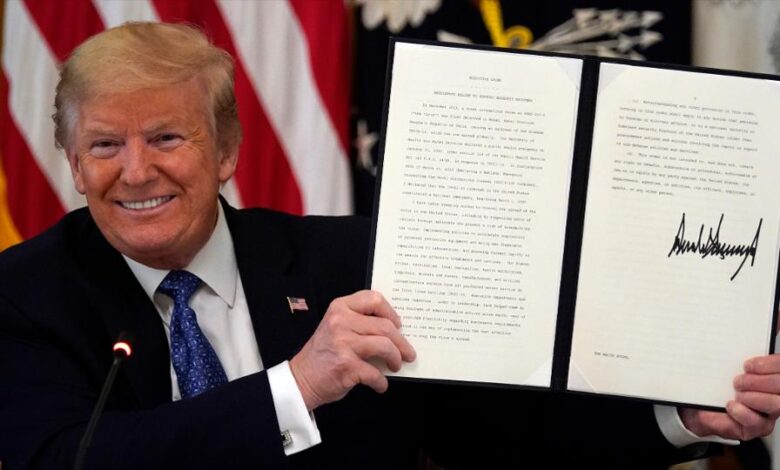
Donald Trump Bitcoin Executive Order USA
Donald Trump executive order USA buying bitcoin is a fascinating topic. It delves into the potential for a US president to mandate Bitcoin adoption, exploring the historical precedents of executive orders in economic policy, the impact of Bitcoin on the US economy, and the potential structure of such an order. We’ll examine the potential public reaction, financial market effects, legal considerations, and even alternative policy options.
This analysis considers the economic, political, and legal implications of such a significant policy shift. From the historical use of executive orders to potential market volatility, this discussion will cover a wide range of potential outcomes.
Historical Context of Executive Orders
Executive orders, as instruments of presidential power, have a long and multifaceted history in shaping US economic policy. Their application has ranged from promoting industrial growth to responding to economic crises. Understanding the historical context of these orders illuminates their potential impact on the current economic landscape.The use of executive orders in economic matters reflects the evolving relationship between the executive branch and the economy.
Initially, their application was more limited, primarily focused on internal administration and specific areas of federal authority. However, as the scope of government involvement in the economy expanded, executive orders became a more frequent tool for addressing economic challenges and opportunities.
Executive Orders and Economic Policy: A Historical Overview
Executive orders have played a significant role in various economic policies throughout US history. From promoting infrastructure development to managing financial crises, presidents have used these orders to influence the economic trajectory. The historical record shows a range of approaches, from direct intervention to more indirect approaches through regulatory changes.
Process and Authority Behind Executive Orders
Executive orders concerning financial matters derive their authority from the constitutional powers vested in the President. The specific powers utilized, such as the power to regulate commerce or to enforce existing laws, determine the scope of an executive order. The process involves issuing a formal order outlining the specific actions, goals, and deadlines. This is often followed by detailed implementation plans developed by relevant government agencies.
Previous Administrations’ Approaches to Similar Economic Initiatives
Various administrations have addressed economic issues with executive orders. For instance, the New Deal era saw a surge in executive orders designed to combat the Great Depression. These orders focused on creating jobs, regulating industries, and stimulating economic activity. Later, during the Cold War and post-war eras, executive orders often focused on promoting economic growth and managing international trade relations.
More recent administrations have employed executive orders to address issues such as deregulation, tax reform, and international trade agreements. These instances demonstrate the varied and dynamic nature of executive orders in economic policy.
Factors Influencing the Use of Executive Orders
Several factors influence the use of executive orders in economic policy. These include the state of the economy, political climate, and the President’s policy priorities. Political considerations, such as public opinion and support from Congress, often influence the nature and scope of executive orders. Additionally, external events, such as global economic crises, can prompt the use of executive orders to address emerging challenges.
Impact of Past Executive Orders on the Economy and Markets
The economic and market impacts of past executive orders have varied. Some orders have stimulated economic growth and created jobs, while others have had a more limited or even negative impact. Factors such as the effectiveness of implementation, the level of cooperation from other branches of government, and the overall economic context play a critical role in determining the outcome.
For example, orders related to deregulation might lead to short-term market volatility but ultimately foster long-term economic growth by reducing burdens on businesses.
Potential Impacts of Bitcoin on the US Economy
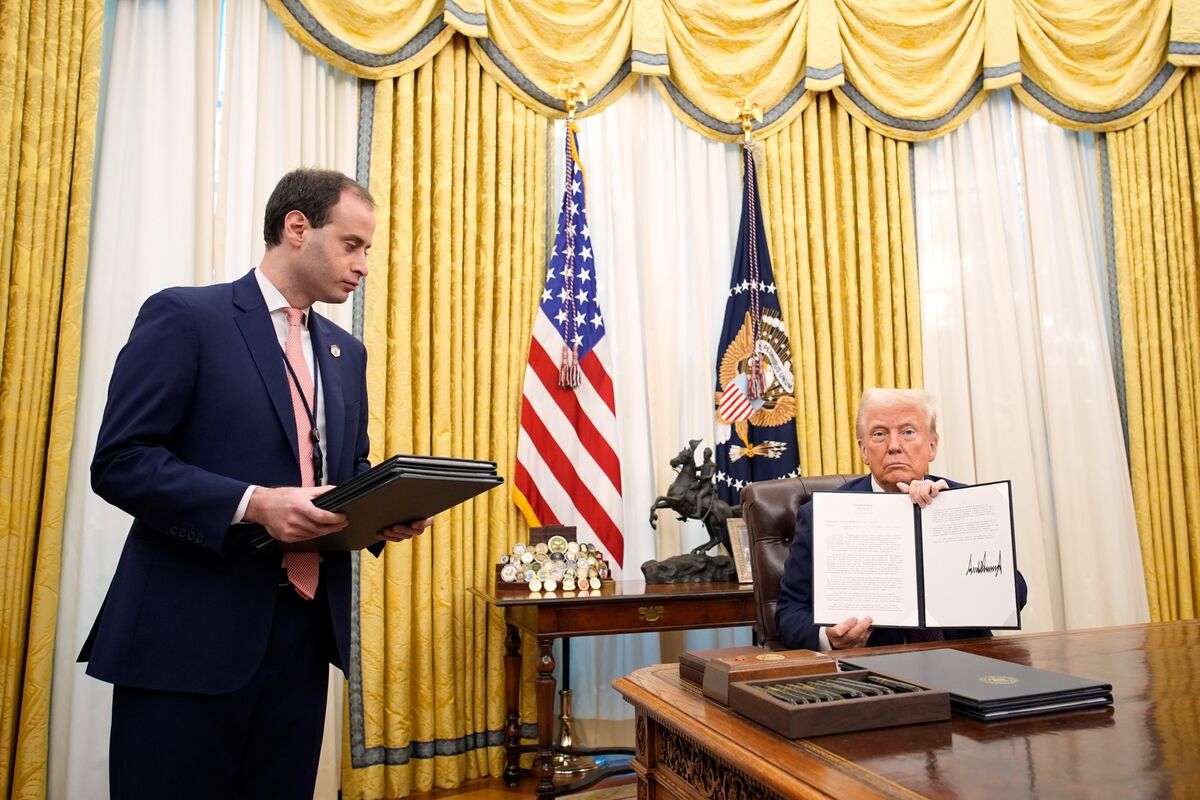
The recent surge in interest surrounding Bitcoin and the potential for government endorsement presents a compelling, yet complex, economic landscape. A significant shift toward widespread US adoption of Bitcoin could have far-reaching effects on various sectors, from finance to consumer behavior. Understanding these potential impacts is crucial for navigating the evolving digital currency landscape.
Potential Economic Effects of Increased US Bitcoin Adoption
The adoption of Bitcoin as a legitimate form of currency within the US could trigger significant economic shifts. Increased acceptance and usage could lead to a more liquid and efficient financial system, allowing for faster cross-border transactions and reduced reliance on traditional banking infrastructure. This could also potentially lower transaction costs for businesses and individuals, boosting efficiency and economic activity.
Conversely, the very decentralization that Bitcoin champions could also present challenges for regulatory bodies and established financial institutions.
Impact on Existing Financial Systems, Donald trump executive order usa buying bitcoin
Bitcoin’s decentralized nature challenges the established hierarchy of traditional financial systems. This presents both opportunities and risks. One potential impact is a disruption of traditional banking structures, as consumers and businesses may seek alternative payment methods. This could lead to increased competition, potentially driving innovation and improved financial services. However, the disruption could also cause instability if not properly managed.
Moreover, the volatility inherent in Bitcoin’s value presents a risk to the stability of financial markets.
Risks and Challenges Associated with Government Support
Government endorsement of Bitcoin carries significant risks. One key concern is the potential for increased market volatility if government backing significantly influences the price of Bitcoin. Maintaining price stability and preventing speculative bubbles is crucial for a stable financial system. Furthermore, the complex regulatory landscape surrounding Bitcoin presents a significant challenge for policymakers. The decentralized nature of Bitcoin contrasts sharply with the existing regulatory framework for traditional finance, requiring substantial adaptation.
The creation of clear and effective regulations will be crucial to mitigate the potential risks.
Scenario Illustrating Bitcoin Adoption’s Impact on Inflation and Interest Rates
If the US government were to adopt Bitcoin, a significant increase in its usage would likely affect inflation and interest rates. A sudden surge in demand for Bitcoin could lead to higher prices, potentially causing inflation if Bitcoin becomes a dominant form of payment. This, in turn, could influence interest rates, as the Federal Reserve would need to adjust monetary policy to maintain price stability.
Conversely, if Bitcoin adoption were gradual and integrated into the existing financial system, its impact on inflation and interest rates would be more moderate. The scenario would depend heavily on how Bitcoin is integrated into the existing payment system and how the government responds to its adoption. A careful approach is essential.
Potential Benefits for US Consumers and Businesses
Increased Bitcoin usage could offer substantial benefits to US consumers and businesses. Consumers might gain access to faster and cheaper cross-border transactions, potentially reducing costs for international purchases. Businesses could benefit from lower transaction fees and potentially increased access to global markets. The reduced reliance on traditional payment processors could result in increased efficiency and greater flexibility.
Moreover, a wider adoption of Bitcoin could foster a more innovative financial landscape, stimulating competition and potentially improving financial services for all.
Potential Trump Executive Order Structure
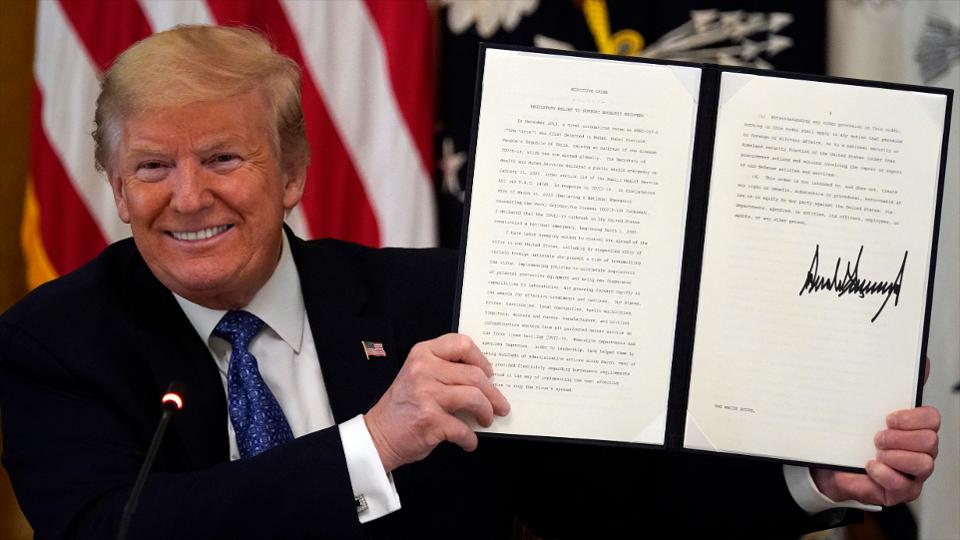
A potential Trump executive order on Bitcoin, if issued, would likely reflect a blend of his past pronouncements on the subject and his overall economic and regulatory philosophies. Such an order would likely focus on addressing perceived risks and vulnerabilities while simultaneously attempting to promote U.S. leadership in the burgeoning cryptocurrency space. The order would likely be controversial, sparking debate and potentially significant legal challenges.The executive order would likely be structured to exert significant regulatory control over Bitcoin and related cryptocurrencies.
While a Donald Trump executive order on the USA potentially buying Bitcoin is still a hot topic, the future of crypto is complex. A recent analyst suggests that a $6,000 Ethereum price is still a possibility, but two key factors must first align, as detailed in this insightful article: 6 k ethereum price still possible 2 things must happen first analyst.
This highlights the volatile nature of the market and underscores the need for careful consideration even if the USA government gets involved with cryptocurrency like Bitcoin.
This control could range from defining the appropriate classification of digital assets to establishing clear guidelines for businesses operating in the sector. The potential impacts on US businesses and citizens would be substantial, and the order’s global implications could reverberate throughout the cryptocurrency market.
Potential Executive Order Sections
This executive order would likely comprise several key sections, each with specific provisions. A comprehensive order would cover a range of issues, from taxation and consumer protection to the security and stability of the financial system.
- Defining Bitcoin and Related Cryptocurrencies: This section would explicitly define Bitcoin and other cryptocurrencies, potentially establishing legal classifications and clarifying their relationship to existing financial regulations. This would provide a clear regulatory framework for the industry. This definition would likely include parameters to differentiate between cryptocurrencies used for investment and those used for payment systems.
- Taxation of Bitcoin Transactions: This section would Artikel the tax implications for Bitcoin transactions, potentially mirroring existing tax laws for capital gains and losses. It would need to address how crypto transactions would be reported and taxed, potentially including income tax implications, capital gains tax implications, and potentially imposing new taxes or fees. This would directly impact investors and businesses.
- Consumer Protection Regulations: This section would address consumer protection concerns associated with Bitcoin, focusing on investor education, fraud prevention, and investor safeguards. The order would likely establish guidelines for cryptocurrency exchanges and trading platforms to protect investors from scams, market manipulation, and other fraudulent activities. This would likely involve measures like disclosure requirements and robust oversight mechanisms.
- Financial Institution Participation: This section would address the role of financial institutions in the Bitcoin ecosystem, outlining permissible interactions between banks, custodians, and crypto exchanges. This would clarify the relationship between traditional finance and cryptocurrency, addressing potential risks and vulnerabilities to the broader financial system. The order would likely set rules for financial institutions to operate with Bitcoin and other cryptocurrencies.
- Cybersecurity and Money Laundering: This section would Artikel measures to combat illicit activities related to Bitcoin, such as money laundering and terrorism financing. It would address cybersecurity vulnerabilities in crypto exchanges and storage, potentially requiring increased security protocols. The order would likely address the use of Bitcoin in illicit activities, establishing protocols for reporting suspicious transactions.
Regulatory Models for Bitcoin
The executive order could adopt different models for regulating Bitcoin. These models would have varying impacts on businesses and citizens.
Remember Donald Trump’s executive order suggesting the US government buy Bitcoin? Well, while that’s still a hot topic, it’s interesting to see how the cryptocurrency space continues to evolve. For example, the recent launch of the first leveraged XRP ETF in the US markets by Teucrium ( teucrium launch first leveraged xrp etf in us markets ) highlights a new direction for investment.
Ultimately, the long-term implications of this and other developments in the crypto world are still uncertain, and perhaps the government’s stance on Bitcoin will change too.
- Prohibition Model: A prohibition model would completely ban Bitcoin transactions, limiting the use of Bitcoin within the U.S. This would severely impact businesses engaged in Bitcoin transactions and significantly curtail investor opportunities. The potential for significant legal challenges and global backlash is high.
- Strict Regulation Model: A strict regulation model would subject Bitcoin to stringent regulations comparable to traditional financial instruments. This would involve licensing requirements, capital requirements, and ongoing reporting obligations. This model would likely result in increased compliance costs for businesses, but it would also provide a degree of stability and investor protection.
- Gradual Integration Model: A gradual integration model would permit Bitcoin to be used within existing regulatory frameworks while introducing new regulations as needed. This would minimize disruption and allow the industry to adapt to changing circumstances. This approach is considered more flexible and adaptable.
Global Market Implications
A Trump executive order on Bitcoin would undoubtedly have significant implications for global cryptocurrency markets.
- US Influence on Global Standards: The U.S. executive order could set a precedent for other countries to follow, influencing global regulatory frameworks and shaping the future of the cryptocurrency market.
- Shift in Investment Patterns: The order could influence investment patterns, potentially driving investment toward jurisdictions with more favorable regulatory environments. This could lead to a reshuffling of global cryptocurrency markets.
- Impact on International Trade: The order could impact international trade involving Bitcoin, potentially creating new barriers or facilitating the development of new cross-border payment systems.
Potential Public Reactions and Opposition
A Trump-issued executive order mandating the US adoption of Bitcoin could ignite a firestorm of public reaction, potentially splitting the nation along economic, political, and ideological lines. The order’s inherent controversy would likely fuel passionate arguments from both sides, shaping the political landscape in unpredictable ways. The historical context of executive orders, coupled with the volatile nature of cryptocurrency, makes this a particularly charged issue.Public response to such an order would likely mirror the diverse range of opinions surrounding Bitcoin itself.
Supporters would likely champion the order as a progressive step toward economic empowerment and financial innovation, while detractors would raise concerns about the inherent risks, the potential for economic instability, and the government’s role in regulating a nascent market.
Potential Arguments for and Against the Order
The debate surrounding a Bitcoin executive order would likely center on the perceived benefits and drawbacks of such a policy.
- Arguments in favor would likely emphasize Bitcoin’s potential for financial inclusion, particularly for those in underserved communities. They might point to the potential for increased economic activity and reduced transaction costs. They could also highlight Bitcoin’s decentralization as a means to enhance financial freedom and reduce reliance on traditional financial institutions.
- Arguments against the order would likely center on the significant risks involved. Critics would likely point to the volatility of Bitcoin’s price, the potential for fraud and scams, and the environmental concerns associated with its mining processes. Concerns about regulatory capture and the potential for unintended consequences would also be prominent.
Political Implications of a Controversial Order
The political implications of such a controversial executive order are substantial. A significant portion of the public could perceive the order as an overreach of executive power, leading to political polarization. This could influence upcoming elections and potentially shift public opinion on Trump’s political standing.
- Potential for Increased Political Polarization: The order’s inherent divisiveness could create a sharp divide within the electorate, exacerbating existing political tensions. The issue would likely become a focal point in political discourse, with both sides deploying various rhetorical strategies to advance their arguments.
- Impact on Trump’s Political Standing: The public reaction to the order could have a profound impact on Trump’s standing within his political base and among broader segments of the electorate. A negative response could damage his reputation and influence future political endeavors. A positive response, while theoretically possible, is less likely due to the inherent risk and complexity of Bitcoin.
Examples of Similar Public Reactions to Past Executive Orders
The public reaction to a Bitcoin executive order could be compared to past executive orders that faced significant opposition. Examples such as the Affordable Care Act (ACA) or the Dodd-Frank Wall Street Reform and Consumer Protection Act illustrate the intense public debate that can ensue when a controversial executive order is issued. The differing perspectives on these policies mirrored the varied public reception that a Bitcoin executive order might receive.
- The Affordable Care Act (ACA), while ultimately enacted, sparked widespread protests and legal challenges. Opposition centered on concerns about government overreach, individual liberties, and the impact on the healthcare system. This exemplifies the potential for widespread public resistance to an executive order with far-reaching implications.
Potential Impact on Trump’s Political Standing
The success or failure of a Bitcoin executive order could have a considerable impact on Trump’s political standing. If the order is widely perceived as successful and beneficial to the public, it could bolster his image as a forward-thinking leader. However, if the order faces significant criticism and generates negative consequences, it could damage his reputation and potentially influence future political aspirations.
This would likely depend on the public’s perception of Bitcoin’s long-term value and the effectiveness of the executive order in achieving its stated goals. The outcome will likely be heavily influenced by the economic and political climate at the time of the order’s implementation.
Analysis of Potential Financial Market Impacts
A potential executive order mandating the US government to buy Bitcoin presents significant, multifaceted implications for the financial markets. The order’s impact will depend critically on its specific details, the prevailing market sentiment, and the broader economic context. From the short-term volatility to long-term structural shifts, the order’s effects on investor confidence and other financial sectors warrant careful consideration.The order’s potential impact on financial markets is complex and multifaceted.
A direct government purchase of Bitcoin could significantly alter market dynamics, potentially driving price fluctuations and impacting investor sentiment. The potential ripple effects extend beyond the cryptocurrency market, influencing traditional financial sectors like stocks and bonds. Analyzing historical market reactions to similar policy changes will offer valuable insight into the potential consequences.
Potential Short-Term Market Impacts
The short-term impact of a US government Bitcoin purchase would likely be characterized by substantial volatility in the cryptocurrency market. This volatility could be triggered by speculative trading, fear of missing out (FOMO) or panic selling. Sudden surges in demand from the government could inflate the price of Bitcoin, while uncertainty about the order’s long-term implications could cause price drops.
This volatile period could extend to traditional markets as investors react to the uncertainty and potentially re-evaluate their investment portfolios.
Potential Long-Term Market Impacts
The long-term consequences of a government Bitcoin purchase are more difficult to predict. However, a government-backed Bitcoin market could potentially lead to increased institutional investment in cryptocurrencies. This could have a profound impact on the future development of the cryptocurrency market. If the order gains acceptance, it could influence broader adoption by businesses and individuals, further shaping the long-term trajectory of the market.
Impact on Investor Confidence
The order’s impact on investor confidence will be crucial. If investors perceive the government’s involvement as a positive signal, it could bolster confidence in cryptocurrencies and drive increased investment. Conversely, concerns about the government’s ability to manage such a large-scale investment or the potential for regulatory risks could lead to a decline in investor confidence, impacting not just the crypto market but also broader financial markets.
Comparison of Market Response Models
Various models can be used to predict market responses to this executive order. One model might focus on the historical relationship between government intervention and market volatility. Another might consider the specific characteristics of the cryptocurrency market, including its speculative nature and limited regulatory framework. A third model could analyze the impact of the order on investor sentiment and risk appetite.
Donald Trump’s proposed executive order on the US potentially buying Bitcoin is certainly intriguing, but the implications are still murky. It’s fascinating to consider how this could intersect with the future of digital assets, and perhaps even be compared to initiatives like Sony’s foray into blockchain technology, partnering with Animoca Brands and others in the Sony Soneium blockchain, Animoca Brands, anime, and Web3 space.
Ultimately, the potential for government involvement in cryptocurrency markets remains a topic of intense debate, regardless of the executive order’s fate.
The most accurate predictions would likely consider a combination of these factors.
Ripple Effects in Other Financial Sectors
A government Bitcoin purchase could have ripple effects across other financial sectors. The order might influence the valuation of other digital assets, impacting investment in blockchain technology and related ventures. Potential adjustments to existing financial regulations might be triggered, with possible ramifications for traditional financial institutions. The order could even influence broader investor sentiment regarding the role of government in the market.
Data Points on Past Market Reactions to Similar Policy Changes
Examining past market reactions to similar policy changes, such as government interventions in other markets, can provide some insight. However, the lack of a direct precedent for a government-backed cryptocurrency purchase makes historical comparisons less conclusive. The specific details of the executive order, including the amount of Bitcoin purchased, the duration of the investment, and the management strategy, will significantly influence the actual market response.
Ultimately, the order’s success will hinge on the effective management of its execution.
Legal and Regulatory Considerations
A potential executive order mandating the US government’s purchase of Bitcoin raises significant legal and regulatory hurdles. Navigating these complexities is crucial for understanding the potential ramifications of such a policy. The US legal framework, while robust, may not be entirely equipped to handle the unique challenges presented by a digital asset like Bitcoin.The US legal landscape surrounding executive orders is well-established, but the application of existing frameworks to a novel asset like Bitcoin presents potential grey areas.
Executive orders, while possessing significant influence, are not above the scrutiny of the judicial system. This scrutiny, particularly regarding potential conflicts with existing financial regulations, will be a critical factor in the order’s trajectory.
Legal Framework Governing Executive Orders
The legal framework for executive orders in the US is rooted in the Constitution and established precedents. The President’s authority to issue executive orders is derived from their role as head of the executive branch, with these orders generally requiring a clear legal basis within existing laws. The Supreme Court’s interpretation of executive power plays a pivotal role in defining the limits and scope of such orders.
Potential Legal Challenges to the Order
Challenges to a Bitcoin purchase order might arise from several angles. Concerns could center around the order’s perceived infringement on Congress’s power over the monetary system, or potentially, its impact on existing financial regulations concerning securities, commodities, or money laundering. The order’s constitutionality could be questioned if it’s perceived as exceeding the President’s authority or infringing on the powers of other branches of government.
Potential Conflicts with Existing Financial Regulations
A government purchase of Bitcoin could create conflicts with existing financial regulations. For example, if the order mandates the purchase of Bitcoin as a treasury asset, it might contradict existing treasury regulations or financial reporting requirements. The order’s impact on existing financial market participants and investors could also be significant. Specific regulations regarding market manipulation and investor protection could come into play.
Examples of Previous Executive Orders Facing Legal Challenges
Numerous executive orders throughout US history have faced legal challenges. These challenges often arise from concerns about the order’s constitutionality, scope, or impact on other branches of government. For instance, some orders regarding environmental regulations or economic policy have been challenged in court, highlighting the importance of legal scrutiny in such cases.
Role of Regulatory Bodies in Responding to Such an Order
Regulatory bodies, such as the Securities and Exchange Commission (SEC) and the Commodity Futures Trading Commission (CFTC), will play a crucial role in responding to a Bitcoin purchase order. Their interpretation and enforcement of existing regulations in light of the order’s requirements will be critical. They will need to assess the order’s potential impact on the financial markets, investor protection, and the stability of the US financial system.
These bodies must also consider the potential conflicts with existing regulations. For instance, the SEC’s stance on Bitcoin’s classification as a security would significantly influence how the order is implemented and enforced.
Illustrative Examples of Executive Orders
Executive orders, while often associated with significant policy changes, can also have a profound impact on financial markets. Understanding past examples provides valuable context for evaluating the potential consequences of a hypothetical executive order concerning Bitcoin. This section will examine historical executive orders related to financial markets, analyzing their content, impact, implementation, and enforcement. Examining these cases offers insight into how such orders can shape economic and financial landscapes.Past executive orders have varied in scope and objective, but some have directly or indirectly influenced financial markets.
The examples below demonstrate how these orders affected different sectors, the intensity of the response, and the overall outcomes. Their historical context provides a valuable framework for evaluating the potential ramifications of a new executive order on Bitcoin.
Historical Executive Orders Related to Financial Markets
Executive orders often address financial stability, economic development, or regulatory reforms. These orders can have far-reaching consequences, impacting various aspects of the financial sector.
- Executive Order 13800 (2017): This order aimed to enhance interagency coordination to improve the effectiveness of the financial regulatory system. It focused on the prevention of financial crises and aimed to strengthen the ability of agencies to identify and mitigate risks. Implementation involved various meetings and collaborations among government agencies. Outcomes included improved communication and coordination, but the long-term impact on financial market stability is still being assessed.
- Executive Order 13975 (2020): This order addressed the impact of the COVID-19 pandemic on the economy and financial system. It contained provisions for various financial relief measures, such as loan programs, aid for small businesses, and initiatives aimed at protecting consumers. Implementation included swift creation of funding and the use of existing frameworks. The order’s success is demonstrably measured by the increased aid distributed to affected sectors.
- Executive Order 13848 (2018): This order promoted regulatory transparency in the financial system. It emphasized the importance of clearer regulations and guidelines for financial institutions. The implementation involved increased reporting requirements for certain entities and improved communication with the public. The outcomes are still being evaluated, but they were likely to promote confidence in the financial system by improving transparency and accountability.
Comparing and Contrasting Executive Orders
A comparative analysis of different executive orders can reveal commonalities and differences in their approach, impact, and implementation.
| Order Number | Date Issued | Key Provisions | Impact |
|---|---|---|---|
| Executive Order 13800 | 2017 | Interagency coordination to improve financial regulation, prevent financial crises. | Improved communication and coordination among agencies, but long-term impact on financial market stability is yet to be fully assessed. |
| Executive Order 13975 | 2020 | Financial relief measures due to the COVID-19 pandemic. Loan programs, aid for small businesses, consumer protection initiatives. | Demonstrably successful in increasing aid distribution to affected sectors. |
| Executive Order 13848 | 2018 | Promoting regulatory transparency in the financial system, clearer regulations and guidelines for financial institutions. | Outcomes are still being evaluated, but likely promoted confidence in the financial system by improving transparency and accountability. |
These examples highlight the diverse ways executive orders can affect financial markets. The potential impact of an executive order concerning Bitcoin would depend significantly on the specific provisions, the implementation strategy, and the overall economic context.
Alternative Policy Options: Donald Trump Executive Order Usa Buying Bitcoin
An executive order on Bitcoin, while seemingly a quick fix, often overlooks the nuanced complexities of economic policy. Instead of a potentially disruptive top-down approach, alternative policies can address similar concerns regarding economic stability and innovation while minimizing potential negative consequences. These alternative options provide a more comprehensive and sustainable solution.
Legislative Approaches to Regulation
Crafting legislative frameworks for cryptocurrencies, including Bitcoin, offers a more structured and enduring approach compared to executive orders. This approach allows for broader public input and a more deliberative process, crucial for shaping regulations that reflect the needs and concerns of diverse stakeholders. It also enables a more comprehensive consideration of potential impacts across different sectors.
- Clearer Regulatory Definitions: Defining the legal status of cryptocurrencies and related financial instruments within existing frameworks can help prevent uncertainty and ambiguity. For example, defining what constitutes a “cryptocurrency exchange” or “digital asset” would provide a baseline for compliance and enforcement. This proactive step reduces potential regulatory arbitrage and creates a predictable environment for market participants.
- Specific Licensing and Reporting Requirements: Implementing licensing frameworks for cryptocurrency businesses and establishing specific reporting requirements for transactions can enhance transparency and monitoring. These measures can help identify potential money laundering or illicit activities, while still fostering innovation. The implementation of such regulations should take into account the unique characteristics of the cryptocurrency market to ensure that compliance burdens do not stifle legitimate businesses.
For instance, licensing requirements for cryptocurrency exchanges could require them to implement robust anti-money laundering (AML) procedures.
- Taxation Policies: Developing clear tax policies for cryptocurrencies and related transactions can provide a stable revenue stream for governments and ensure equitable treatment for all participants. This includes defining the taxable nature of cryptocurrency gains, losses, and transactions, as well as considering the implications for existing tax laws. A well-defined tax framework fosters transparency and reduces the potential for tax evasion or avoidance within the cryptocurrency market.
Pros and Cons of Each Approach
Each legislative approach has its own set of advantages and disadvantages, which need to be carefully considered. The effectiveness of a particular approach depends on the specific economic goals and societal context.
Comparison and Contrast of Policy Options
A comparison of the policy options reveals that each approach addresses different aspects of the economic concerns surrounding cryptocurrencies. Clearer regulatory definitions provide a foundation for future regulation, licensing and reporting requirements enhance market oversight, and taxation policies address revenue generation and accountability. The effectiveness of each approach hinges on its ability to adapt to the dynamic nature of the cryptocurrency market.
For instance, a comprehensive approach may require a combination of all three policies to effectively manage the multifaceted challenges of the cryptocurrency landscape.
Final Review
In conclusion, a potential Donald Trump executive order on Bitcoin adoption presents a complex web of possibilities. From its potential to revolutionize the financial landscape to the significant legal and political hurdles, the outcome is uncertain. This analysis highlights the multifaceted considerations involved, showcasing the potential economic and political ramifications of such a decision.