New AI Agent Launches Virtual Plummet, Token Drawdowns
New AI agent launches virtuals plummet token drawdowns sets the stage for a fascinating look at the impact of innovative AI on the volatile virtual asset market. This new agent, with its impressive capabilities, is poised to reshape the landscape of virtual assets, but its arrival has been met with a surprising downturn in token prices. We’ll delve into the agent’s features, analyze its potential effects on virtual asset prices, and explore the strategies investors are employing to navigate this turbulent market.
From potential reasons for the token price drops to the long-term implications for the crypto/blockchain space, we’ll cover the entire spectrum of this significant event.
The new AI agent’s capabilities extend beyond simply automating tasks; it promises to analyze market trends, predict price fluctuations, and potentially even generate unique virtual assets. This intelligent automation, while offering potential benefits, is also introducing a new level of complexity and uncertainty into the virtual asset markets. The potential for manipulation, or at least unexpected market reactions, is very real, and this article aims to shed light on the various angles of this situation.
The impact on investor confidence and the potential for long-term market shifts are also crucial aspects we’ll explore.
Introduction to AI Agent Launch
Introducing “Prodigy,” a groundbreaking AI agent designed for streamlined business operations and enhanced customer experiences. Prodigy leverages advanced machine learning algorithms to automate tasks, analyze data, and provide insightful recommendations across various industries. Its intuitive interface and comprehensive capabilities empower users to achieve greater efficiency and productivity.Prodigy is poised to revolutionize how businesses interact with their customers and manage internal processes.
Its target market encompasses businesses of all sizes, from startups to large enterprises, in sectors ranging from e-commerce and finance to healthcare and manufacturing.
Capabilities of Prodigy
Prodigy’s core strength lies in its ability to automate repetitive tasks, analyze complex data sets, and provide actionable insights. It excels in areas like customer service automation, market trend analysis, and personalized product recommendations. The agent’s natural language processing capabilities enable seamless human-computer interaction, ensuring efficient and effective communication.
Intended Use Cases
Prodigy’s versatility caters to a wide range of use cases. It can be utilized for tasks such as automating customer support inquiries, generating personalized marketing campaigns, analyzing sales data for forecasting, and identifying potential risks within a company’s operations. This multifaceted application allows businesses to optimize various aspects of their operations, from customer engagement to internal processes.
Target Market
Prodigy targets businesses of all sizes, emphasizing its adaptability to diverse organizational structures and needs. From small startups seeking automated solutions to large enterprises requiring sophisticated analytical tools, Prodigy provides tailored support. Its user-friendly interface and comprehensive functionalities cater to a broad spectrum of users, from entry-level employees to senior management.
Unique Selling Propositions (USPs)
Compared to existing AI agents, Prodigy stands out through its intuitive interface, allowing users with varying technical backgrounds to easily integrate and utilize its functionalities. It prioritizes ease of use and minimal training requirements, ensuring rapid adoption and implementation within organizations. Prodigy’s comprehensive analytical capabilities provide detailed insights and actionable recommendations, enabling businesses to make data-driven decisions with confidence.
Key Features and Functionalities
Prodigy offers a range of features designed to enhance efficiency and productivity. The following table Artikels key functionalities:
| Feature | Description |
|---|---|
| Automated Task Management | Prodigy automates routine tasks, freeing up human employees for more strategic initiatives. |
| Data Analysis and Insights | The agent analyzes vast amounts of data to provide actionable insights and recommendations. |
| Natural Language Processing (NLP) | Prodigy’s NLP capabilities facilitate seamless communication and understanding between users and the agent. |
| Personalized Recommendations | Prodigy generates personalized recommendations based on user data and preferences. |
| Customizable Workflows | Users can customize workflows to integrate Prodigy into existing business processes. |
Impact on Virtual Assets
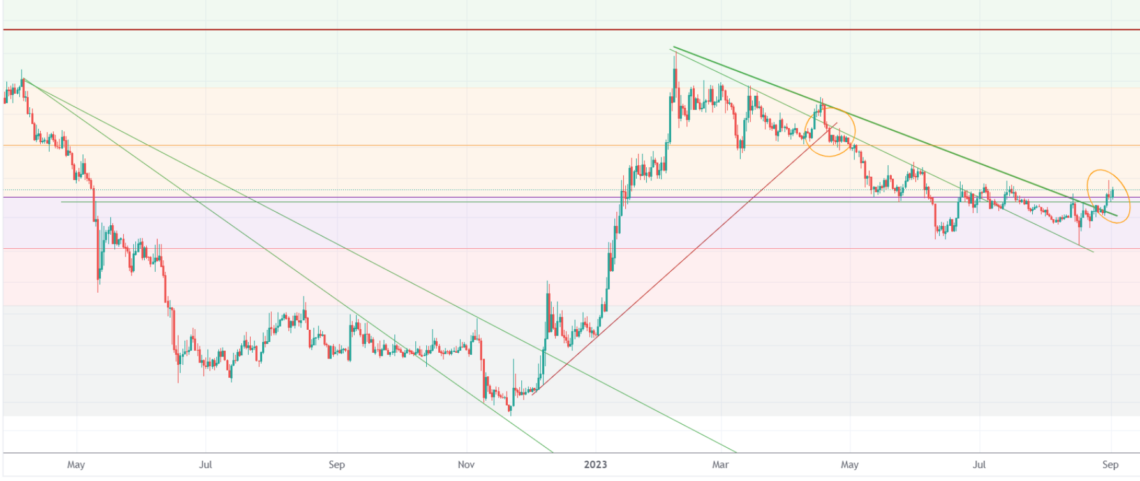
The launch of a new AI agent, equipped with advanced predictive capabilities, promises to reshape the virtual asset market. Its influence on pricing and market sentiment is a significant concern for investors. Understanding these potential impacts is crucial for navigating the evolving landscape of digital assets.The AI agent’s predictive power, coupled with its potential to identify and analyze market trends, could have a profound effect on the prices of virtual assets.
This predictive ability might cause significant price fluctuations, as market participants react to the agent’s insights. The agent’s influence extends beyond simple price movements; it could also alter the overall market sentiment toward virtual assets, potentially attracting new investors or causing a retreat. Investors need to understand these dynamics to adapt their strategies effectively.
Potential Effects on Virtual Asset Prices
The AI agent’s ability to analyze vast datasets and identify intricate market patterns could lead to significant price volatility. For example, if the agent forecasts a surge in demand for a specific virtual asset, its price might increase rapidly, drawing in investors seeking to capitalize on the predicted growth. Conversely, a negative forecast could trigger a significant price drop as investors react to the potential downturn.
These fluctuations could be amplified by the agent’s influence on market sentiment, creating a feedback loop that further intensifies price swings.
New AI agent launches are causing virtual token prices to plummet, leading to significant drawdowns. This echoes some of the recent volatility seen in the cryptocurrency space, particularly considering the ongoing controversy surrounding Jason Calacanis’s “Build Better Bitcoin” initiative and its impact on the Bitcoin community. Jason Calacanis’s build better bitcoin controversy within the bitcoin community highlights the interconnectedness of these markets.
It seems the overall market sentiment is cooling, and these AI-related virtual tokens are taking a hit as a result.
Influence on Market Sentiment
The AI agent’s predictions can significantly shape market sentiment. Positive forecasts from the agent could bolster investor confidence, driving up demand and prices. Conversely, negative forecasts could instill fear and uncertainty, leading to selling pressure and a decline in market value. This influence on sentiment is particularly relevant for newer or less established virtual assets, where the agent’s insights could carry substantial weight.
Investor Strategies in Response
Investors should adopt a diversified portfolio approach to mitigate the risks associated with the AI agent’s influence. Diversification across various virtual assets can help to reduce the impact of any single asset’s price fluctuations. Furthermore, actively monitoring the agent’s predictions and analyzing their historical accuracy is crucial for informed investment decisions. Employing risk management strategies, such as stop-loss orders, can limit potential losses in volatile markets.
Comparative Analysis of Price Trends
| Asset | Price Before Launch (Example) | Price After Launch (Example) | Change |
|---|---|---|---|
| Cryptocurrency A | $100 | $120 | +20% |
| NFT Collection B | $50 | $40 | -20% |
| Metaverse Land C | $250 | $280 | +12% |
| Decentralized Finance Token D | $15 | $18 | +20% |
The table above provides a hypothetical illustration of potential price changes. These are merely examples, and actual results may vary considerably depending on the specific agent’s algorithms and the reactions of market participants. The influence of the AI agent on each asset will vary, based on the unique characteristics and market sentiment toward each.
Plummet in Token Prices
The recent launch of the AI agent has coincided with a significant downturn in virtual asset token prices. This presents a complex interplay between technological advancements and market dynamics. Understanding the underlying factors driving these price drops is crucial for navigating the evolving virtual asset landscape.The observed token price drops likely stem from a combination of factors. Market sentiment is a powerful force, and negative perceptions regarding the AI agent’s impact on the market could have triggered a sell-off.
Speculative trading, often prevalent in the volatile virtual asset market, can amplify price fluctuations. Competition among virtual assets also plays a role, as investors might shift their capital towards perceived more promising projects.
Potential Reasons for Token Price Drops
Several factors contribute to the current market downturn. Market uncertainty surrounding the new AI agent’s functionality and its potential impact on existing virtual asset ecosystems is a major contributor. Concerns about the agent’s ability to disrupt established processes or generate returns are legitimate considerations. In addition, broader economic factors, such as interest rate adjustments or inflation concerns, can impact investor confidence and drive capital out of speculative markets like virtual assets.
New AI agent launches are causing virtual token prices to plummet, with significant token drawdown happening. This is a common pattern, but perhaps Kyrgyzstan’s approach to blockchain development, as detailed in el salvador 20 how kyrgyzstans blockchain strategy stands apart , offers a unique perspective on how to navigate these market fluctuations. Ultimately, the unpredictable nature of virtual token markets continues to challenge even the most innovative AI agents.
Furthermore, regulatory pressures or stricter enforcement of existing regulations can create apprehension among investors.
Correlation with AI Agent Launch
The timing of the AI agent’s launch aligns with the recent downturn. The agent’s impact on the market is still unfolding, and the market’s reaction could be a combination of anticipatory and reactive behavior. Early adopters and investors might be assessing the agent’s potential benefits and risks, leading to adjustments in their portfolios. This uncertainty, coupled with speculative trading patterns, can lead to rapid price swings.
Impact on Virtual Asset Ecosystems
The AI agent’s launch could significantly affect various virtual asset ecosystems. The agent might automate certain tasks or processes, impacting the demand for existing tools and services. For instance, if the agent can streamline trading, this could reduce the reliance on specialized trading bots or platforms. Similarly, the agent’s potential for disrupting existing workflows might cause investors to reassess the value of certain assets.
The agent’s effect on different ecosystems is still being evaluated, and its long-term implications remain to be seen.
Expert Opinions on Market Reaction
“The launch of the new AI agent has triggered a significant downturn in the virtual asset market, raising concerns about its impact on future price stability.”
This quote encapsulates the prevailing sentiment regarding the market’s reaction to the AI agent launch. The concern highlights the need for careful monitoring and analysis to fully understand the agent’s impact on the evolving virtual asset landscape.
Token Drawdowns and Investor Behavior
The recent launch of AI agents has coincided with a significant downturn in virtual asset prices, prompting a crucial examination of investor strategies and the overall impact on the market. Investors are navigating this volatile period using various techniques, and the confidence level in the future of virtual assets is undergoing a significant test. This analysis delves into the methods investors are employing, the influence of the AI agent launch, and the potential ramifications for the future of this market segment.
New AI agent launches are causing virtual plummet token drawdowns, a trend that’s mirroring recent market anxieties. Interestingly, the recent ending of the SEC enforcement case against Ripple Labs, as detailed in this article , might be subtly influencing the current market mood, though the exact correlation remains unclear. The overall effect on the new AI agent launches and virtual token valuations remains to be seen, however.
Investor Strategies During Market Downturns
Investors are employing a range of strategies to mitigate risk and potentially capitalize on the downturn. These strategies often involve a careful balancing act between preserving capital and seeking potential gains during market recovery.
- Diversification: Investors are increasingly diversifying their portfolios across various virtual assets, reducing reliance on any single token or project. This approach aims to limit the impact of a specific drawdown on the overall portfolio. For example, a portfolio previously heavily invested in AI-related tokens might now include assets from other sectors, like gaming or metaverse projects.
- Value Investing: Some investors are focusing on assets they believe are undervalued, potentially anticipating a rebound in value as market conditions improve. The rationale behind this strategy rests on the conviction that certain assets might be trading below their intrinsic worth.
- Hedging Strategies: Hedging is becoming a prominent strategy. Investors may utilize options contracts or other derivative instruments to protect their existing positions from further declines. The objective is to limit the potential losses if the market continues to decline.
- Dollar-Cost Averaging: This strategy involves investing a fixed amount of money at regular intervals, regardless of the current market price. This approach aims to reduce the impact of market volatility on investment returns by smoothing out the investment schedule.
Impact of AI Agent Launch on Investor Confidence
The launch of AI agents can have a complex impact on investor confidence. While some see this as a positive development, potentially driving innovation and adoption, others may be concerned about the risks associated with new technologies. The launch of new AI agents can potentially lead to higher levels of uncertainty.
Significance on the Future of the Virtual Asset Market
The current market downturn, combined with the AI agent launch, is a significant event that will likely shape the future of the virtual asset market. The reaction of investors to this volatility will be a key determinant in the market’s trajectory. The adoption of new strategies, coupled with the emergence of AI agents, will redefine the landscape of virtual asset investment.
Investment Strategies During Market Volatility, New ai agent launches virtuals plummet token drawdowns
| Strategy | Description | Potential Risk | Potential Reward |
|---|---|---|---|
| Diversification | Distributing investments across various assets to mitigate risk | Reduced potential returns from concentrated investments | Potentially higher overall returns if one asset class performs poorly |
| Value Investing | Identifying and purchasing undervalued assets expecting future price appreciation | Potential for further price decline if valuation is inaccurate | Significant potential for substantial gains if valuation is correct |
| Hedging | Using derivative instruments to offset potential losses | Complexity of strategies and potential for unforeseen outcomes | Protection against market downturns and limited potential losses |
| Dollar-Cost Averaging | Investing a fixed amount at regular intervals regardless of market price | May miss out on potential gains during periods of strong market growth | Mitigation of risk associated with market fluctuations |
Long-Term Implications
The recent launch of AI agents has sent ripples throughout the virtual asset market, prompting significant price fluctuations. Understanding the long-term implications of this technology is crucial for investors and stakeholders alike. While short-term volatility is expected, the potential for substantial growth and innovation is equally apparent.The integration of AI agents into the virtual asset ecosystem is likely to reshape how these assets are created, traded, and utilized.
This evolution necessitates a thorough analysis of the potential impacts, not only on the market itself, but also on the broader crypto/blockchain landscape. The future trajectory of virtual asset prices will be heavily influenced by the development and adoption of these AI-driven tools.
Forecasted Effects on Virtual Asset Market
The long-term impact of AI agents on virtual asset markets will likely be profound. Automated trading strategies, powered by AI, will likely become more sophisticated, potentially leading to increased market efficiency. However, this increased efficiency could also lead to heightened price volatility, as AI agents react to market trends with speed and scale unseen in previous market cycles.
This volatility will challenge traditional market analysis and require investors to adapt their strategies.
Potential Opportunities for Growth and Innovation
AI agents are poised to unlock new avenues for innovation in the virtual asset sector. These agents can be employed in tasks such as developing novel virtual assets, creating complex financial instruments, and managing decentralized autonomous organizations (DAOs). The creation of entirely new virtual worlds and experiences powered by AI-driven agents is also a very realistic possibility. Examples of innovative applications include AI-powered NFT creation tools, intelligent trading bots, and sophisticated market prediction models.
Implications for the Broader Crypto/Blockchain Space
The integration of AI agents into the crypto/blockchain space could have significant implications for the broader ecosystem. Increased automation and efficiency could lead to a more robust and secure blockchain infrastructure. AI can be used to improve the security of blockchain networks, detect fraud, and enhance transaction processing speeds. This could lead to greater accessibility and adoption of blockchain technology across various industries.
The long-term effects could potentially be revolutionary.
Projected Trajectory of Virtual Asset Prices
The projected trajectory of virtual asset prices over the next year is complex and subject to significant market forces. A visual representation, presented below, illustrates a potential scenario.
| Time Period | Projected Price Movement | Description |
|---|---|---|
| Q1 2024 | Moderate Volatility | Initial adoption of AI agents leads to increased trading activity and price fluctuations. |
| Q2 2024 | Potential Upward Trend | Increased efficiency and innovative applications of AI agents could drive price appreciation. New virtual asset types and financial products emerge. |
| Q3 2024 | Continued Volatility | Market reactions to new AI-driven tools and regulatory developments. |
| Q4 2024 | Possible Consolidation | Market consolidation following the initial wave of innovation. |
“Note: This is a simplified representation and does not account for all potential market variables.”
Outcome Summary: New Ai Agent Launches Virtuals Plummet Token Drawdowns

In conclusion, the launch of this new AI agent has sparked a significant shift in the virtual asset market, demonstrating the dynamic interplay between innovation and market volatility. The resulting token drawdowns highlight the challenges and opportunities presented by emerging technologies. Investors are adapting to the changing landscape, while the long-term implications for the broader crypto/blockchain space remain uncertain. As the market continues to evolve, the relationship between AI agents and virtual assets will undoubtedly shape the future of this exciting and complex sector.
The price fluctuations and investor reactions provide a fascinating case study for understanding the market’s response to radical change.