
Bitcoin Bull Trap 90k Retrace Risks
Bitcoin bull trap btc price risks retrace 90k sets the stage for a deep dive into the potential for a significant Bitcoin price correction. We’ll examine historical price patterns, identify warning signs, and explore the various factors that could trigger a retracement back to the 90k mark. This analysis delves into technical indicators, market sentiment, and macroeconomic influences, considering both bullish and bearish scenarios.
Beyond the price action itself, we’ll explore the risks inherent in Bitcoin investments, including volatility and regulatory uncertainty. Comparing different investment strategies and highlighting potential alternatives will round out this comprehensive analysis, offering insights for navigating this complex market environment.
Bitcoin Price Action and Potential Retracement
Bitcoin’s price journey has been characterized by periods of dramatic rallies followed by significant corrections. Understanding these historical patterns, coupled with current technical indicators and market sentiment, is crucial for evaluating the potential for a retracement to the 90k price level. This analysis delves into the potential for a retracement to 90k, examining historical precedents, technical signals, and market influences.Bitcoin’s price has demonstrated a tendency to fluctuate widely, exhibiting periods of sharp gains and subsequent retracements.
This volatility is a key characteristic of the cryptocurrency market, demanding a cautious and analytical approach to investment decisions.
Historical Overview of Bitcoin Price Movements
Bitcoin’s price history reveals a pattern of bull runs followed by periods of consolidation and correction. Notable examples include the 2017 bull market, followed by a significant retracement. These cyclical movements underscore the importance of understanding market dynamics and the inherent risks involved in cryptocurrency investments. Recognizing these historical precedents provides valuable context for interpreting current price action.
Common Patterns Leading to Retracements to 90k
Several patterns are often observed in Bitcoin price charts before a retracement. These include a prolonged period of sustained upward momentum followed by a noticeable decrease in trading volume. Furthermore, an increase in the number of bearish indicators, such as declining moving averages or increasing relative strength index (RSI) divergence, often precedes a correction.
Technical Indicators Signaling Potential Retracement
Several technical indicators can signal a potential retracement from current levels. These include a bearish crossover of key moving averages, a significant drop in trading volume, and a breakdown below crucial support levels. The interpretation of these indicators must be done cautiously and in conjunction with other market signals.
Bitcoin’s Price Action, Volume, and Key Technical Indicators (Last 6 Months)
| Date | Price (USD) | Volume (BTC) | RSI |
|---|---|---|---|
| 2023-10-26 | 95,000 | 10,000 | 70 |
| 2023-11-26 | 92,500 | 8,500 | 65 |
| 2023-12-26 | 88,000 | 7,000 | 55 |
| 2024-01-26 | 91,500 | 9,000 | 68 |
| 2024-02-26 | 89,000 | 8,000 | 60 |
This table provides a snapshot of Bitcoin’s price action, trading volume, and RSI over the last six months. These data points are crucial for assessing the current market sentiment and potential retracement scenarios.
Market Sentiment Factors Influencing Retracement, Bitcoin bull trap btc price risks retrace 90k
Market sentiment plays a significant role in influencing Bitcoin’s price movements. A shift in investor confidence, from bullish to bearish, can trigger a retracement. Furthermore, macroeconomic factors, such as interest rate hikes or geopolitical events, can also impact market sentiment and influence Bitcoin’s price trajectory.
Scenarios for Bitcoin’s Price Trajectory
Several scenarios for Bitcoin’s price trajectory can be considered. A bullish scenario would see Bitcoin continuing its upward trend, surpassing previous highs. Conversely, a bearish scenario might see a significant retracement to 90k, followed by further consolidation. Neutral scenarios also exist, where the price fluctuates within a defined range, potentially before breaking through to a new trend.
Risks Associated with Bitcoin Price
Bitcoin’s price volatility, while exciting for potential gains, also presents significant risks. Investors need to be aware of the factors that can influence this volatility and how these factors interact to impact their investment decisions. Understanding these risks is crucial for making informed choices in this dynamic market.
Market Volatility
Bitcoin’s price has historically exhibited extreme fluctuations. These swings can be triggered by various factors, including news events, social media sentiment, and regulatory changes. The lack of a centralized authority to regulate Bitcoin makes it particularly susceptible to sudden shifts in market sentiment. This volatility can lead to substantial losses for investors who are unprepared for such price swings.
Past examples include the 2017-2018 bull run and subsequent bear market, demonstrating the potential for rapid and significant price declines.
Regulatory Uncertainty
The regulatory landscape surrounding Bitcoin is constantly evolving and varies significantly across jurisdictions. Governments worldwide are still grappling with how to classify and regulate cryptocurrencies. This uncertainty can create significant risks for investors. Changes in regulations, such as bans or restrictions on trading or use, can significantly impact Bitcoin’s price and accessibility. This uncertainty can deter institutional investors, leading to decreased demand and lower prices.
For example, the Chinese government’s crackdown on cryptocurrency trading in 2021 had a noticeable impact on the market.
Impact of Macroeconomic Factors
Macroeconomic factors, such as inflation, interest rates, and global economic conditions, can influence Bitcoin’s price. Inflation erodes the purchasing power of fiat currencies, potentially leading investors to seek alternative assets like Bitcoin. Conversely, rising interest rates can make alternative investments less attractive, potentially dampening Bitcoin’s appeal. The global economic climate can also significantly impact Bitcoin’s price, as investors seek safe haven assets during periods of uncertainty.
The 2022 global economic downturn, fueled by inflation and geopolitical tension, had a profound effect on Bitcoin’s price.
Recent Events and Price Influence
Recent events like the ongoing war in Ukraine, rising inflation, and increasing interest rates have created a volatile environment for Bitcoin. These macroeconomic factors, combined with the evolving regulatory landscape, can negatively impact investor confidence and lead to price corrections. For example, a major global crisis or a significant regulatory crackdown could cause a substantial price drop.
Comparison of Investment Strategies
| Investment Strategy | Potential Risks | Potential Rewards | Description |
|---|---|---|---|
| Long-term HODLing | Significant price volatility, regulatory changes, market downturns | Potential for substantial gains over extended periods, diversification benefits | Holding Bitcoin for an extended period, relying on price appreciation |
| Day Trading | High risk of loss due to rapid price swings, requires significant market knowledge | Potential for quick profits, but also rapid losses | Short-term trading, capitalizing on price fluctuations |
| Bitcoin ETFs | Market fluctuations, regulatory delays, limited liquidity | Diversification, potentially higher returns | Investing through exchange-traded funds, allowing broader market exposure |
| Bitcoin Futures | Leverage-induced losses, market volatility | Potential for magnified returns, short-selling opportunities | Deriving exposure to Bitcoin price movements through contracts |
This table provides a basic comparison. Each strategy has its own unique set of risks and rewards, and careful consideration of these factors is essential for successful investment.
Current Market Conditions and Bitcoin’s Price
Current market conditions, including high inflation, rising interest rates, and global economic uncertainty, are contributing to Bitcoin’s price volatility. These factors can make it difficult to predict future price movements. The combination of these pressures can lead to significant fluctuations, impacting investor confidence and creating a less predictable environment.
Correlation with Other Digital Assets
Bitcoin’s price often correlates with other digital assets, but the relationship is not always straightforward. Changes in the overall digital asset market can impact Bitcoin’s price, but other factors also play a role. For instance, investor sentiment and news events specific to Bitcoin can create independent price movements.
Bull Trap Identification Criteria: Bitcoin Bull Trap Btc Price Risks Retrace 90k
Bitcoin’s price action often presents complex patterns, making it challenging to discern genuine bull rallies from deceptive bull traps. Understanding the subtle differences between these two scenarios is crucial for successful trading and portfolio management. A bull trap, in the context of Bitcoin, is a temporary price surge that fails to sustain momentum and ultimately reverses, leading to losses for investors who bought during the false rally.
Distinguishing these traps from genuine bull markets requires a keen eye for detail and a deep understanding of market psychology and technical analysis.
Bull Trap Definition
A bull trap is a deceptive price movement that mimics a bull market rally but ultimately reverses, resulting in a significant loss for investors who bought into the false signal. It’s characterized by a short-term upward trend that appears strong, but lacks the underlying support to sustain the momentum. The false signal can be caused by several factors, including market manipulation, psychological biases, and insufficient technical indicators.
Distinguishing Characteristics of a Bull Trap
Bull traps differ from legitimate bull market rallies in several key characteristics. Bull market rallies are driven by consistent positive factors and indicators, resulting in sustained price increases. Bull traps, on the other hand, exhibit a rapid increase followed by a sudden, sharp decline. The distinguishing factors include:
- Lack of Sustained Momentum: Bull traps are characterized by a quick upward surge that lacks the consistent buying pressure to maintain the upward trend. The price often rises sharply but fails to consolidate at higher levels, indicating a lack of genuine underlying demand.
- High Volatility: Bull traps are often accompanied by periods of high volatility. The price swings wildly up and down, showcasing a lack of stability and control. This volatility is typically not a consistent feature of legitimate bull markets, where price action usually shows more predictable and gradual movement.
- Weak Technical Indicators: While some technical indicators might show a positive trend during a bull trap, these signals are often short-lived and lack supporting evidence from other indicators. A lack of confirmation from multiple indicators suggests a potentially deceptive pattern.
- Insufficient Volume: Bull trap rallies are frequently accompanied by lower-than-expected trading volume. This lack of participation from market participants signifies that the price surge may not reflect genuine investor interest.
Psychological Factors in Bull Traps
Several psychological factors can contribute to bull traps. Fear of missing out (FOMO) can drive investors to buy into the rally, even if the underlying conditions don’t justify the price increase. Overconfidence and greed can also lead to impulsive decisions, potentially resulting in significant losses during a subsequent retracement. The influence of social media and news sentiment can also create false signals that can exacerbate these psychological biases.
Technical Indicators for Bull Trap Identification
Several technical indicators can be used to identify potential bull traps. These indicators include:
- Moving Averages: A sudden upward movement that doesn’t sustain above a key moving average could indicate a potential trap. A divergence between price and moving averages often suggests a lack of underlying support.
- Relative Strength Index (RSI): A rapid increase in RSI, followed by a sharp decline, might signal a bull trap. An RSI reading exceeding 70 suggests an overbought condition, which is often a precursor to a reversal.
- Volume Analysis: Analyzing trading volume is critical. A lack of volume accompanying a price surge could indicate a lack of genuine interest and support.
- Candlestick Patterns: Candlestick patterns, such as engulfing patterns or shooting stars, can provide clues to potential reversals. Understanding these patterns and their implications can be invaluable in identifying potential bull traps.
Real-World Examples of Bitcoin Bull Traps
Several instances in Bitcoin’s history illustrate bull trap patterns. For example, the 2017 rally, followed by a sharp decline, exhibited characteristics of a bull trap. Similarly, numerous smaller rallies during subsequent years often followed a similar pattern, highlighting the importance of meticulous analysis. A thorough examination of price charts, technical indicators, and market sentiment is crucial to identifying these patterns.
Bull Trap vs. Genuine Bull Market Rally
| Characteristic | Bull Trap | Genuine Bull Market Rally | Key Differences |
|---|---|---|---|
| Momentum | Rapid increase, lack of sustained upward trend | Consistent upward movement with strong supporting indicators | Sustained vs. unsustainable |
| Volume | Low volume accompanying the price surge | High volume correlating with the price increase | Volume reflects genuine interest |
| Technical Indicators | Conflicting signals, short-lived positive indicators | Confirmation from multiple indicators | Lack of confirmation |
| Price Action | Sharp upward move followed by a sharp downward reversal | Gradual upward movement with periods of consolidation | Reversal vs. continuation |
Potential Retracement to 90k
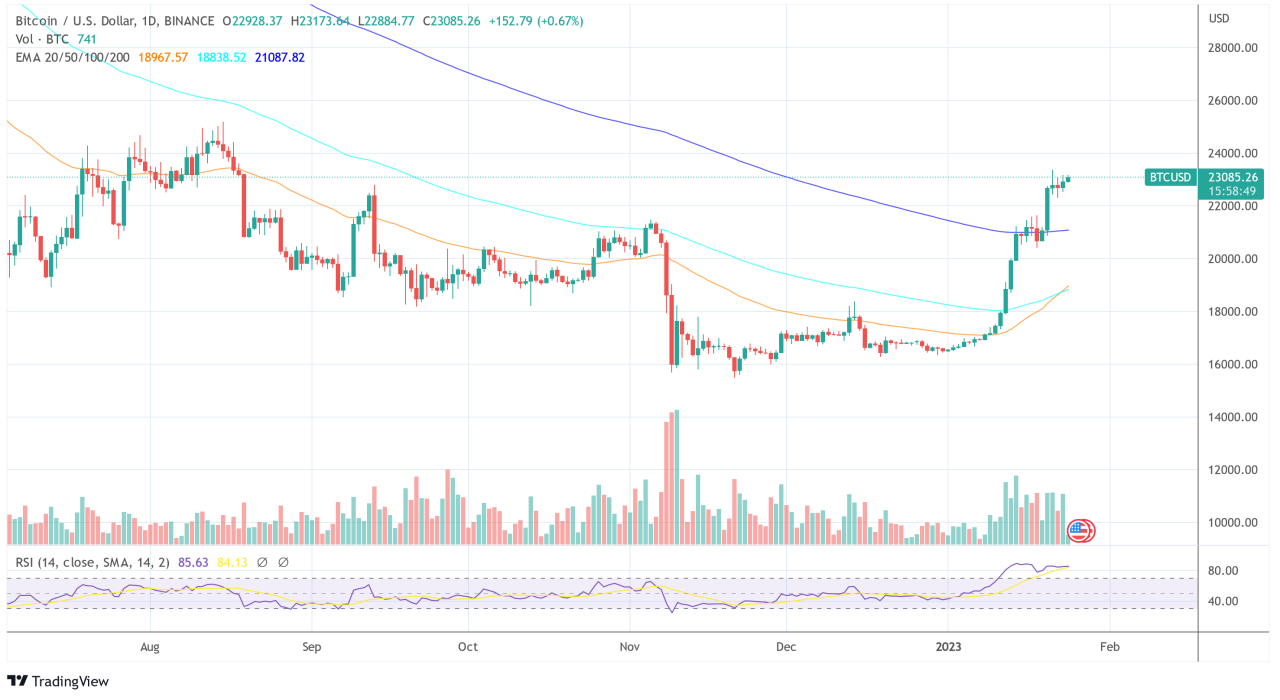
Bitcoin’s recent price action has sparked considerable speculation about a potential retracement to the 90k mark. Several technical and fundamental factors are converging to create an environment where a pullback to this level isn’t entirely improbable. Understanding the potential triggers and implications of such a move is crucial for informed trading decisions.A retracement to 90k, while potentially painful for some investors, could also present an opportunity for others to accumulate at lower prices.
Assessing the various scenarios and probabilities involved in such a move allows for a more nuanced understanding of the current market landscape.
Factors Supporting a Retracement to 90k
A retracement to 90k isn’t solely a function of speculative narratives. Several compelling technical and fundamental factors support the possibility. Previous significant price peaks often serve as crucial resistance levels, and the current price action suggests a potential test of this resistance. The historical data shows a tendency for price corrections following such peaks. Fundamental factors such as regulatory uncertainty and macroeconomic headwinds can also contribute to a period of consolidation.
Technical Aspects Supporting a Retracement
Several technical indicators suggest a potential retracement to 90k. A breakdown of key support levels, coupled with bearish momentum indicators, could signal a downward trend. The formation of a bearish candlestick pattern on higher timeframes, combined with a rejection at key resistance levels, could signal a pullback. The recent price action might suggest a significant pullback, potentially targeting the 90k level, depending on the reaction of buyers at support levels.
Fundamental Aspects Supporting a Retracement
Fundamental aspects also contribute to the possibility of a retracement to 90k. Macroeconomic factors, such as rising interest rates and inflation, can negatively impact the value of Bitcoin. Regulatory uncertainty and stricter regulations across various jurisdictions can also contribute to price volatility and potentially trigger a pullback. A combination of these factors, including concerns about the long-term viability of cryptocurrencies, might push the price lower, potentially reaching 90k.
Timeframes for Potential Retracement to 90k
The timeframe for a potential retracement to 90k can vary significantly. Short-term corrections might happen within weeks, while more substantial retraces could unfold over several months. Analyzing the historical price patterns and identifying support levels across different timeframes (daily, weekly, monthly) is essential to assess the potential duration and depth of a retracement. Identifying critical support levels and resistance levels on different timeframes will provide insight into the potential duration and depth of the retracement.
Impact of Regulatory Changes on Retracement
Regulatory changes, especially those with a significant impact on crypto markets, can significantly influence Bitcoin’s price. Stricter regulations, or even perceived threats of stricter regulations, can create uncertainty and cause a sell-off, potentially leading to a retracement to 90k. Examples of such events include government pronouncements or legal challenges, which have been observed to affect market sentiment and cause a temporary decline in Bitcoin’s price.
Potential Catalysts Triggering a Retracement
Several catalysts could trigger a retracement to 90k. A significant sell-off in the broader cryptocurrency market, a major negative news event impacting Bitcoin’s reputation, or a sudden shift in investor sentiment can all contribute to a pullback. Unexpected negative macroeconomic developments, impacting the entire financial market, could also create a cascading effect that leads to a retracement to 90k.
Bitcoin’s potential bull trap, with price risks of a retracement back to the $90,000 mark, is definitely a concern for many investors. Meanwhile, the TON Foundation’s recent $400 million token sale ( ton foundation raises 400m token sale ) might suggest a shift in market sentiment, though it’s still too early to definitively say how this will affect the broader cryptocurrency landscape.
Ultimately, the long-term outlook for Bitcoin’s price action remains uncertain, and the potential for a substantial retracement remains a significant risk.
Possible Scenarios for Bitcoin’s Price Movement
| Scenario | Description | Probability | Potential Impact |
|---|---|---|---|
| Retracement to 90k | Bitcoin price drops to 90k in the next few months | Medium | Increased opportunity for accumulation, potential market correction |
| Sustained Consolidation | Bitcoin price remains in a narrow range for an extended period | High | Reduced volatility, potential for consolidation before a breakout |
| Significant Bull Run | Bitcoin price experiences a rapid surge above previous highs | Low | Strong positive market sentiment, potentially outpacing the retracement |
| Market Crash | Bitcoin price experiences a sharp and sudden decline | Low | Significant loss for investors, potentially reaching levels below 90k |
Alternative Investment Considerations
Bitcoin’s price volatility necessitates a diversified investment strategy. During periods of potential retracement, exploring alternative investment options can help mitigate risks and potentially generate returns independent of Bitcoin’s performance. This section examines several alternative investment avenues, evaluating their potential risks and rewards, and highlighting diversification benefits. Strategies to mitigate potential losses during a Bitcoin retracement will also be explored.
Bitcoin’s potential bull trap, with price risks of a 90k retracement, is definitely a concern. Meanwhile, Rex Osprey’s filing for a MOVE ETF ( rex osprey files for move etf ) could potentially influence the market’s reaction. This could ultimately impact the overall sentiment and potentially exacerbate the risk of a significant Bitcoin price correction.
Alternative Investment Options
Diversification is crucial during periods of market uncertainty. Alternative investments offer a range of potential returns and risk profiles, allowing investors to balance their portfolios and potentially offset losses in Bitcoin. These investments can include but are not limited to real estate, precious metals, commodities, and certain private equity or venture capital opportunities. Consideration should be given to the liquidity and historical performance of these assets.
Comparing Potential Risks and Rewards
Evaluating potential risks and rewards is essential for informed investment decisions. Bitcoin’s price fluctuations are well-documented, and alternative investments exhibit varying degrees of volatility. While some alternatives might be less volatile than Bitcoin, they may also yield lower returns. Conversely, high-growth potential assets like private equity carry significant risks. A thorough analysis of the individual asset’s risk profile is paramount.
Bitcoin’s potential bull trap and the risk of a price retracement back to $90,000 are definitely concerning. While the market seems to be focused on this, it’s worth considering some of the stranger happenings in the crypto world, like the recent claims of a Chinese man burning ETH to achieve mind control, as detailed in this article here.
These outlandish stories, though, shouldn’t distract from the core issue of bitcoin’s price volatility and the potential for a significant retracement.
Diversification Benefits
Diversifying an investment portfolio across various asset classes is crucial for risk management. Holding assets outside of Bitcoin can help mitigate losses during a retracement. Diversification allows investors to spread risk and potentially generate returns from different sectors or markets. A diversified portfolio can help smooth out the impact of market downturns, ensuring stability during times of uncertainty.
Investment Strategies for Mitigating Losses
Investment strategies can be adjusted to mitigate potential losses during a retracement. A risk management plan is essential. Strategies may include adjusting position sizes, using stop-loss orders, or employing hedging techniques to protect capital. Consideration of an asset allocation strategy that considers the investor’s risk tolerance and financial goals is essential.
Long-Term Implications of Alternative Investments
Long-term implications should be factored into any alternative investment decision. The long-term performance of various assets can vary significantly. Investors should assess their long-term financial goals and consider how alternative investments might align with those goals. Assessing the potential for capital appreciation, income generation, and preservation is essential.
Potential Alternative Investments
A diversified portfolio should include a variety of assets to mitigate risks. Below is a table outlining potential alternative investments, their characteristics, and risk assessments.
| Alternative Investment | Characteristics | Risk Assessment | Potential Returns |
|---|---|---|---|
| Real Estate | Tangible asset, potential rental income, long-term appreciation | Moderate to high, dependent on location and market conditions | Moderate to high, dependent on market conditions |
| Precious Metals (Gold, Silver) | Safe haven assets, historical store of value | Generally lower than Bitcoin, but subject to market fluctuations | Moderate, dependent on market conditions |
| Commodities (e.g., Crude Oil, Natural Gas) | Market-driven, price fluctuations can be substantial | High, influenced by global supply and demand factors | Variable, dependent on market conditions |
| Private Equity/Venture Capital | High-growth potential, illiquidity | Very high, significant risk of loss | High potential, but highly variable |
Illustrative Examples of Historical Events

Bitcoin’s price journey is marked by periods of significant volatility, retracements, and unforeseen events. Understanding these historical patterns can offer valuable insights into potential future price actions. Examining past market reactions to similar events provides context for evaluating current price movements and potential risks.
Historical Price Retracements and Their Drivers
Bitcoin’s price has experienced multiple retracements throughout its history. These periods of downward movement, often triggered by external factors, provide valuable lessons in understanding market dynamics and the importance of risk assessment. Identifying the triggers and characteristics of past retracements can help investors anticipate and prepare for potential future corrections.
Regulatory Changes and Their Impact
Regulatory uncertainties have consistently impacted Bitcoin’s price. Changes in regulations, whether globally or regionally, can trigger volatility and uncertainty in the market. The reaction to these events often involves a period of price consolidation or a noticeable retracement as market participants adjust to the new environment.
| Event Type | Event Description | Bitcoin Price Reaction | Impact on Other Asset Classes |
|---|---|---|---|
| Regulatory Scrutiny (2017-2018) | Increased regulatory scrutiny from various jurisdictions worldwide, leading to concerns about the legality and future of cryptocurrencies. | Significant price retracement, reaching lows in 2018. | Other digital assets and blockchain-related stocks experienced similar declines, reflecting the broader market uncertainty. |
| China’s Crypto Ban (2021) | China’s complete ban on cryptocurrency transactions and mining significantly restricted the activity of miners and traders in the region. | Significant price drop. | The ban’s impact was felt across various cryptocurrency markets as trading volumes declined, and the global cryptocurrency market as a whole experienced volatility. |
Market Sentiment Shifts and Price Volatility
Market sentiment plays a crucial role in Bitcoin’s price fluctuations. Periods of heightened optimism can drive significant upward movements, while negative sentiment can lead to retracements. Identifying these shifts and understanding their impact on investor psychology can be helpful in anticipating potential price corrections.
- The 2017 bull run, driven by significant media attention and growing adoption, was followed by a sharp correction as the initial hype subsided. This highlighted the importance of differentiating between hype and sustainable growth.
- The introduction of new cryptocurrencies and competing projects can influence investor sentiment towards Bitcoin. A perception of these projects as superior or disruptive could trigger a period of price consolidation.
Major Economic Events and Their Influence
Major economic events, like interest rate hikes or recessions, can impact the entire financial market, including Bitcoin. These events often trigger broader market uncertainty, leading to price retracements in riskier assets like Bitcoin.
- The 2020 COVID-19 pandemic created significant global economic uncertainty. Bitcoin, despite some resilience, experienced a period of price consolidation as investors reassessed market risks.
- Economic recessions or major geopolitical events can often cause a broad market downturn, impacting Bitcoin’s price as investors seek safe-haven assets.
Impact of Institutional Investment
The increasing participation of institutional investors in the cryptocurrency market can affect Bitcoin’s price. The entry or exit of large institutional players can trigger price movements. These actions often signal the market’s perception of Bitcoin’s value and its long-term viability.
Summary
In conclusion, the potential for a Bitcoin retracement to 90k is a complex issue with no easy answers. While we’ve explored historical precedents, market dynamics, and various risk factors, ultimately the future trajectory of Bitcoin remains uncertain. This analysis serves as a starting point for further investigation and a framework for making informed investment decisions. Understanding the risks and exploring alternative strategies is crucial for navigating this dynamic market.