The Path to Seven Figures: Insights from a Health Insurance Executive on Building Long-Term Wealth


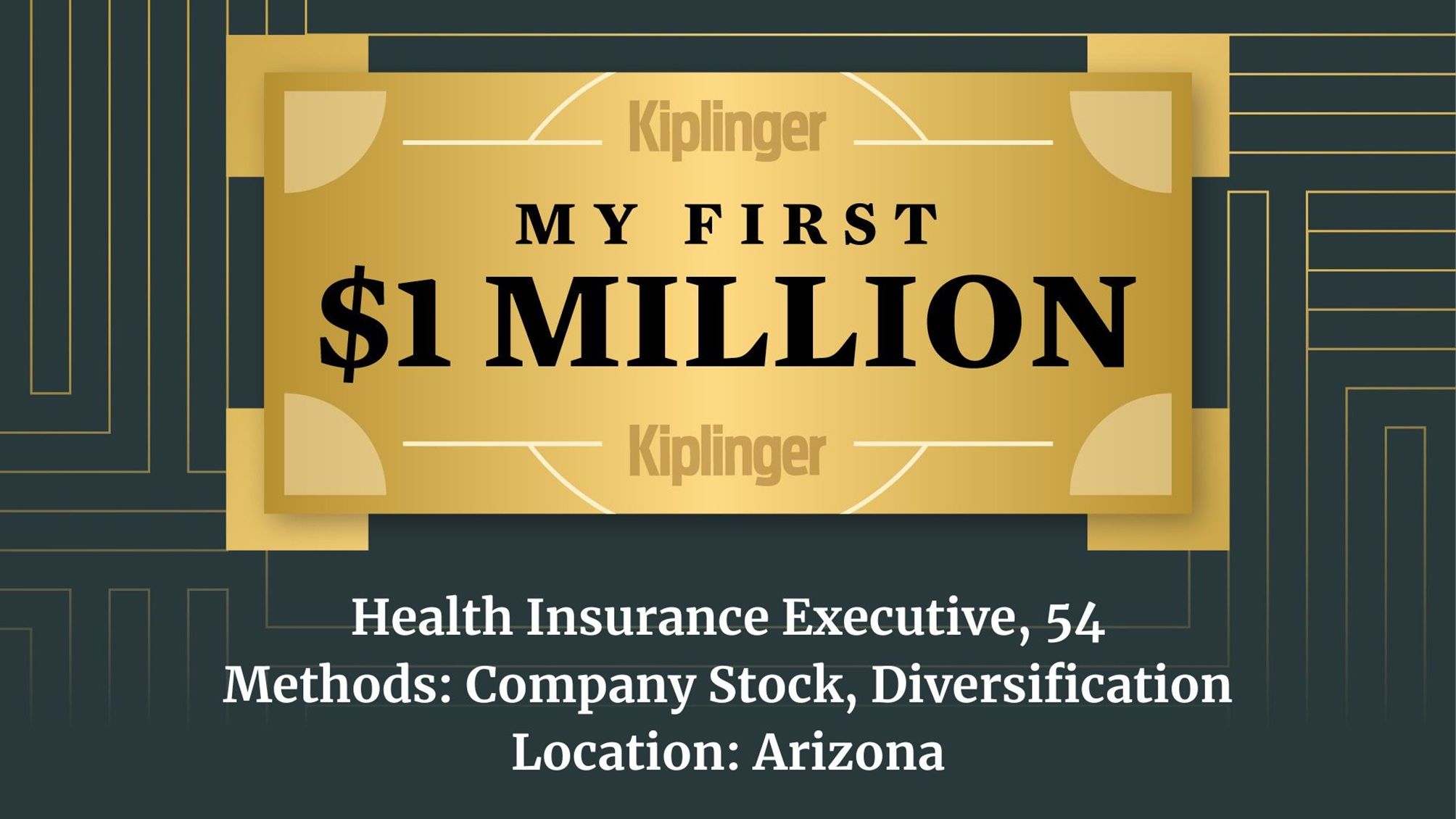
The journey to accumulating $1 million in net worth is frequently viewed through the lens of sudden windfalls or inheritance; however, for many, it remains a disciplined, decades-long exercise in strategic asset allocation and consistent financial planning. A 54-year-old health insurance executive based in Arizona, who has achieved this milestone, offers a detailed perspective on the mechanics of wealth creation, the psychological shifts required to manage significant capital, and the complex reality of transitioning from an accumulation phase to retirement.
The Mechanics of Early Accumulation
The subject’s strategy for reaching the seven-figure mark by his mid-30s relied heavily on a concentrated position within his employer’s equity, supplemented by a diversified portfolio in industries where he possessed specialized knowledge, such as biotechnology. While conventional financial wisdom often cautions against over-indexing in employer stock—a practice that exposes an individual to "double risk," where both employment income and investment capital are tied to the same entity—the executive’s bet on his firm’s long-term performance proved lucrative.
By consistently maximizing contributions to his 401(k) and leveraging the growth of his company’s stock, he successfully met his primary target before the age of 40. This period was characterized by a high savings rate and a deliberate minimization of discretionary spending. The reliance on company stock was not merely a passive choice but a calculated risk based on his professional conviction in the company’s market trajectory.
Chronology of Financial Evolution
The financial life of the executive can be divided into three distinct phases: the accumulation phase, the maturation phase, and the current transition phase.
During his 20s and early 30s, the focus was entirely on growth. His primary goal was to breach the $1 million threshold. This era was defined by a lack of diversification, as the majority of his capital was concentrated in his employer’s stock and select high-growth sectors.

In his late 30s and 40s, the focus shifted toward preservation and tax efficiency. As his family grew, the executive realized that the risk profile of his portfolio was no longer sustainable. He transitioned from self-directed investing to engaging with professional financial advisors, specifically those at Schwab, to manage the increased complexity of his accounts. This phase also involved the funding of educational savings for his children, ensuring they could pursue their academic goals without the burden of student loan debt.
Currently, at 54, the executive is in the pre-retirement phase. He describes this as a period of psychological adjustment, where the challenge is no longer "how to earn more" but "how to define the next chapter."

Supporting Data and Portfolio Diversification
Modern portfolio theory emphasizes that while concentrated positions can lead to significant outperformance, they also invite catastrophic risk. Data from financial analysts consistently show that a diversified portfolio—comprising domestic and international equities, fixed income, and alternative assets—is the most reliable vehicle for long-term wealth preservation.
The executive’s own experience underscores the tension between growth and safety. He admits that, in hindsight, the decision to forego real estate investments in favor of keeping all capital in the stock market was a missed opportunity for income-stream diversification. Real estate, often used as a hedge against inflation and a provider of steady cash flow, would have complemented his equity-heavy strategy. His current focus on establishing a charitable trust reflects a sophisticated evolution of his financial goals, moving beyond simple accumulation toward legacy planning and tax-advantaged philanthropy.

Implications of Financial Freedom
The attainment of $1 million—and the subsequent growth of his net worth well beyond that initial milestone—has fundamentally altered his relationship with money. He describes a "worry-free" mindset, where the stress of day-to-day expenditures has been eliminated. However, he is careful to distinguish between "worry-free" and "frivolous." He maintains a disciplined approach to spending, noting that his core values and habits were formed during the years of sacrifice, which prevents him from falling into the trap of lifestyle inflation.
The broader implication for investors is that financial freedom acts as a tool for autonomy rather than a license for excess. For this executive, the freedom to choose when to retire and how to support his family is the true utility of his wealth.

The Psychological Hurdle of Retirement
One of the most profound revelations in the executive’s account is that financial readiness does not equate to retirement readiness. Despite having the liquid assets required to exit the workforce, he remains employed. He identifies two main reasons for this: a lack of a clear "non-financial" plan for retirement and a lingering, yet diminishing, attachment to his professional identity.
This phenomenon is common among high-achieving professionals. Retirement research suggests that the "loss of purpose" is a significant risk for those who have spent decades defining themselves by their career achievements. The executive acknowledges that he is currently in the process of mapping out his future chapters, recognizing that while the math of retirement is solved, the human element—what he will do with his time—is a more complex variable.

Official Perspectives on Wealth Management
Financial experts often stress that the transition to retirement requires a shift in mindset from "the accumulation phase" to "the distribution phase." This involves:
- Tax Risk Management: As the executive noted, he regrets not utilizing Roth IRAs earlier. Roth accounts provide tax-free growth and withdrawals, which are critical for retirees looking to manage their tax bracket in later years. The failure to optimize tax structures early can lead to significant "tax drag" during retirement.
- Estate Planning: The executive currently relies on a will and powers of attorney but lacks a formal estate plan. This is a common oversight among high-net-worth individuals. A formal plan, including trusts, is essential to minimize probate costs, ensure the efficient transfer of assets, and provide for the long-term protection of heirs.
- Mental Preparation: The transition from a professional to a retiree is a major life event. Experts recommend "test-driving" retirement, such as taking a sabbatical or volunteering, to gauge the psychological impact of leaving the workforce.
Broader Impact and Conclusion
The story of this Arizona-based executive serves as a template for the disciplined, long-term investor. It highlights that the "first million" is rarely the result of a single event but the outcome of a persistent, multi-decade plan. The transition from a self-directed, high-risk investor to a client of professional wealth managers illustrates the natural maturation of a financial strategy.

Ultimately, the executive’s experience suggests that wealth is a means to an end. The ability to fund his children’s education, provide for his family, and set up charitable trusts to support child and senior health are the outcomes that give the money its value. For those currently on the path to their first million, the lesson is clear: set a specific target, remain disciplined, but allow for the evolution of the plan. Life rarely proceeds in a straight line, and the ability to adapt to market shifts, tax changes, and personal milestones is the hallmark of a successful long-term financial strategy.