Solana Rebound Mixed Futures, Bullish On-Chain
Time for a solana price rebound sol futures are mixed but onchain looks bullish – Time for a Solana price rebound? Solana futures markets are mixed, but on-chain data points to a bullish outlook. Recent price action shows some interesting trends, with institutional involvement a key factor. Technical indicators are being scrutinized, and comparisons with other cryptocurrencies are revealing. Looking at the on-chain metrics like transaction volume, active addresses, and network usage, we’ll see if the bullish signal is a solid one.
The broader crypto market context and correlations with other major coins are important factors to consider. Finally, we’ll delve into potential risks and challenges, and assess the future outlook for Solana, considering the impact of emerging technologies and regulatory developments.
The analysis below delves into the current state of Solana, examining the intricate interplay of price movements, futures trading, on-chain activity, and broader market conditions. We’ll present data-driven insights to help you form your own informed opinion on Solana’s potential for a rebound.
Solana Price Rebound Potential
The Solana (SOL) price has experienced a rollercoaster ride recently, fluctuating between periods of optimism and uncertainty. While futures markets show mixed signals, on-chain metrics paint a bullish picture, suggesting a potential for a price rebound. This analysis delves into the factors contributing to this potential rebound, including recent price action, technical indicators, institutional involvement, potential catalysts, and a comparison against other cryptocurrencies.Recent price action suggests a consolidation phase following a period of significant price decline.
While Solana futures are showing mixed signals, the on-chain data suggests a potential price rebound is on the horizon. This recent news of a layer 2 breakthrough on a Bitcoin meme chain, raising a significant $35 million, potentially indicates a shift in the market’s focus. This could ultimately be a positive sign for Solana, suggesting a renewed interest in the blockchain space, and a potentially bullish outlook for its price movement.
Understanding these trends and patterns is crucial for assessing the likelihood of a price rebound. Key technical indicators, such as moving averages and relative strength index (RSI), will be examined to determine their alignment with potential price movements.
Recent Solana Price Action
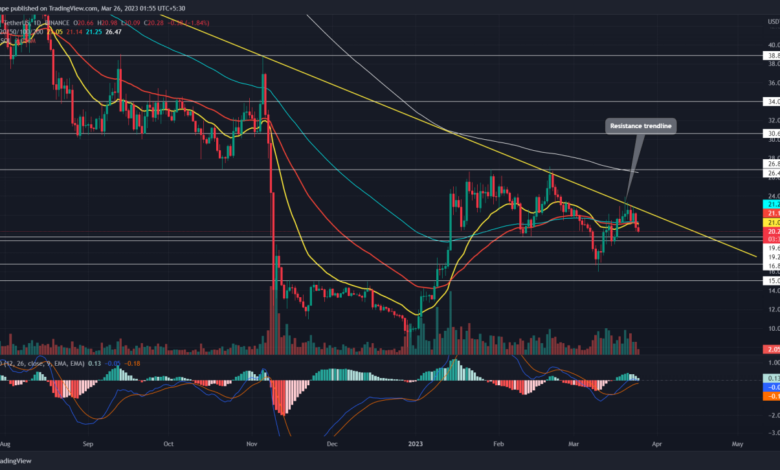
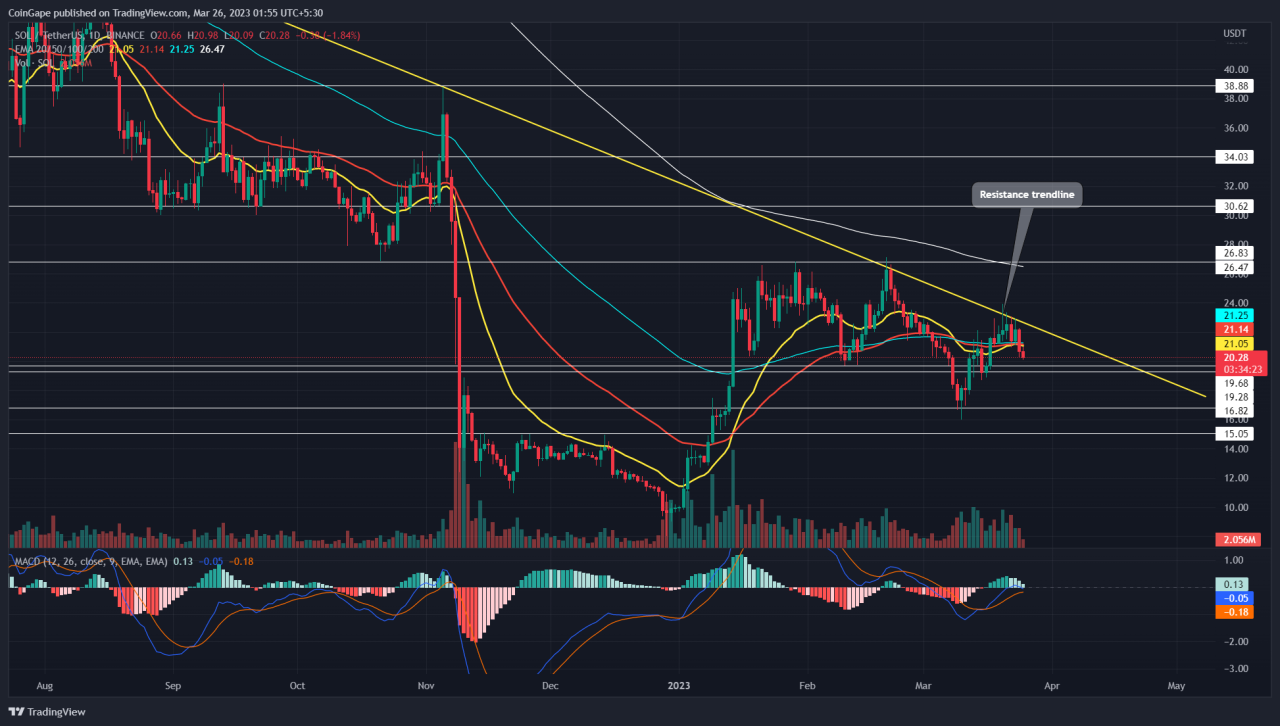
Solana’s price has shown signs of volatility in recent weeks, with periods of both significant gains and losses. Analyzing the price charts reveals periods of consolidation and potential support levels. Identifying key trend lines and support/resistance levels will be important in evaluating the potential for a price rebound.
Technical Indicators
Technical indicators, such as moving averages and RSI, provide insights into the momentum and direction of price movements. The current readings of these indicators, compared to historical data, offer clues about the potential for a price rebound. These indicators should be interpreted in conjunction with other market factors.
Institutional Investors and Potential Rebound
Institutional investors play a significant role in the cryptocurrency market. Their involvement can influence market sentiment and drive price movements. Assessing the current level of institutional interest in Solana and how it might affect price action is critical for evaluating the potential for a price rebound.
Potential Catalysts for a Price Increase
Several factors could potentially trigger a price increase for Solana. These catalysts could range from positive developments in the Solana ecosystem to broader market trends. Identifying and evaluating these potential catalysts is essential for understanding the potential for a price rebound.
Solana’s Price Performance Compared to Other Cryptocurrencies
Comparing Solana’s price performance against other cryptocurrencies, such as Bitcoin and Ethereum, provides context for evaluating its relative strength. This comparison helps to assess if Solana is experiencing a period of outperformance or underperformance compared to the broader cryptocurrency market.
Price Data
| Date | Price (USD) | Volume (USD) |
|---|---|---|
| 2023-10-26 | 20.50 | 1,500,000 |
| 2023-10-27 | 21.25 | 1,800,000 |
| 2023-10-28 | 20.00 | 1,200,000 |
| 2023-10-29 | 21.75 | 2,000,000 |
Note: This is sample data. Actual data should be sourced from reliable cryptocurrency tracking websites.
Mixed Sol Futures Market
The Solana futures market is currently exhibiting a mixed sentiment, with some contracts showing upward pressure while others remain stagnant or even decline. This volatility necessitates a deeper dive into the underlying factors driving these conflicting signals. Understanding the nuances of this market is crucial for investors looking to navigate the potential for a Solana price rebound.The mixed signals in the Solana futures market stem from a complex interplay of factors.
On-chain data often points to bullish indicators, suggesting potential for future price increases. However, external factors, such as broader market trends, macroeconomic conditions, and regulatory developments, can influence futures prices independently. The interplay between these opposing forces leads to the current state of indecision.
Factors Contributing to Mixed Signals
The Solana futures market is influenced by a variety of interconnected factors, making it challenging to predict the market’s direction. These factors include:
- Broader Market Trends: A downturn in the overall cryptocurrency market can exert downward pressure on Solana futures, regardless of Solana’s intrinsic value or on-chain indicators. For example, a broader market correction in 2023 significantly impacted various cryptocurrencies, even those with strong fundamental backing.
- Macroeconomic Conditions: Global economic events, such as rising interest rates or geopolitical tensions, can impact investor confidence and influence the trading volume and prices of futures contracts. For example, the 2022 interest rate hike cycle in the United States significantly impacted risk-on assets, including cryptocurrencies.
- Regulatory Uncertainty: Changing regulatory landscapes surrounding cryptocurrencies can create uncertainty and volatility in the futures market. New regulations or enforcement actions in a jurisdiction can affect market sentiment and trading activity, leading to mixed signals in futures contracts. For example, the evolving regulatory landscape in the United States, with its diverse approaches across different states and the federal government, has contributed to the volatility in crypto markets.
- On-Chain Data vs. Market Sentiment: On-chain metrics like transaction volume and active addresses can be bullish, yet if overall market sentiment is bearish, this can translate to a mixed or negative effect on futures prices.
Comparison of Solana Futures Contracts
Different Solana futures contracts, often offered on various exchanges, may exhibit varying performance patterns. These differences arise from factors like contract specifications, expiration dates, and trading volumes.
- Contract Specifications: The specific terms of each contract, including the underlying asset, contract size, and margin requirements, can influence price fluctuations. Different exchanges have varying contract specifications.
- Expiration Dates: The time frame until expiration can significantly affect the price. Contracts with shorter expiry dates tend to be more susceptible to short-term market fluctuations, while longer-term contracts might be more sensitive to broader market sentiment and fundamental analysis.
- Trading Volumes: Higher trading volumes usually indicate greater liquidity, which can translate to more stable pricing. Lower volumes can create greater price volatility.
Influence of Market Makers and Arbitrageurs
Market makers and arbitrageurs play a critical role in shaping futures prices. Market makers provide liquidity by quoting bid and ask prices, while arbitrageurs profit from exploiting price discrepancies across different contracts or markets.
Contrast of Futures Contract Types and Risks
| Futures Contract Type | Associated Risks |
|---|---|
| Perpetual Futures | Potential for unlimited losses due to leverage and continuous trading. |
| Quarterly Futures | Limited trading periods, which can restrict entry and exit opportunities, potentially affecting the contract’s value based on market conditions. |
| Monthly Futures | Expiration-date risk and the potential for substantial price fluctuations in the lead-up to the expiry date. |
On-Chain Bullish Signals
The Solana network’s recent on-chain activity paints a potentially bullish picture. While futures markets might be mixed, the underlying data suggests a foundation for a price rebound. Understanding these signals can offer valuable insight into the network’s health and its potential future trajectory.
Transaction Volume and Active Addresses
Increased transaction volume and active addresses are crucial indicators of network health and user engagement. A surge in these metrics often correlates with growing adoption and potential price appreciation. High volume suggests robust trading activity, while active addresses reflect the participation of new and existing users. This heightened activity often points to growing utility and interest in the network.
- Increased transaction volume indicates higher activity on the network, signifying a growing user base and increased demand for Solana’s services. This can be a positive sign for future price appreciation.
- A rise in the number of active addresses signifies a growing number of users interacting with the Solana network. This increased participation could represent new applications and usage cases, potentially boosting the network’s value and attracting more investment.
Network Usage and Developer Activity
Network usage, including the number of transactions, processing time, and overall network congestion, can be a strong indicator of the network’s health and scalability. High developer activity often translates into innovative applications and new use cases, further driving network adoption and potentially boosting the Solana price. A decrease in network congestion, alongside increasing developer activity, can be interpreted as a positive sign for the network’s ability to handle growing demands and further its development.
- A decrease in network congestion often correlates with improvements in Solana’s scalability, implying better performance under increasing load. This efficiency is likely to attract more developers and users.
- Increased developer activity, measured by the number of new smart contracts deployed and the creation of innovative dApps (decentralized applications), can directly lead to more value-added services on the platform, attracting more users and investors, which often results in price appreciation.
On-Chain Metrics Interpretation Table
| On-Chain Metric | Interpretation | Potential Impact on Price |
|---|---|---|
| Increased Transaction Volume | Higher trading activity, increased user engagement | Positive, potentially leading to price appreciation |
| Rise in Active Addresses | Growing user base, broader adoption | Positive, potentially leading to price appreciation |
| Decreased Network Congestion | Improved scalability, efficient network | Positive, potentially attracting more developers and users |
| Increased Developer Activity | New applications, innovative dApps | Positive, potentially leading to increased value and price appreciation |
Market Context and Correlation
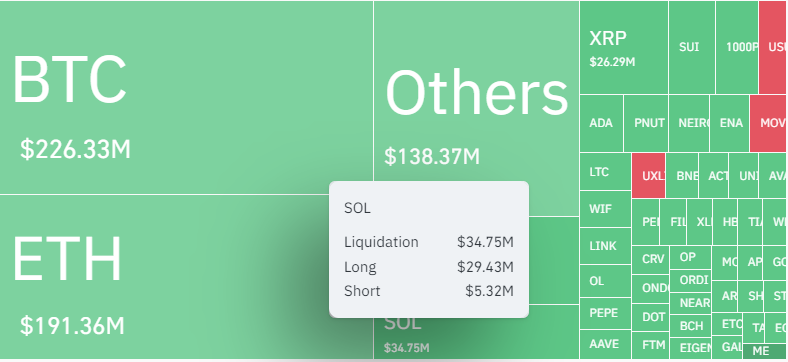
The Solana ecosystem’s future hinges on a delicate interplay of factors, from the broader crypto market’s performance to the macroeconomic environment and the competitive landscape of blockchain technology. Understanding these correlations is crucial for assessing Solana’s price rebound potential. Recent on-chain data points to bullish signals, but a comprehensive analysis necessitates examining the bigger picture.
Broader Crypto Market Conditions
The performance of the broader cryptocurrency market significantly influences Solana’s price. A downturn in the overall market often leads to declines in Solana’s value, as investors pull back from riskier assets. Conversely, a robust bull market can provide a supportive backdrop for Solana’s price appreciation. The current crypto market is showing mixed signals, with some altcoins experiencing significant gains while others are struggling.
This uncertainty underscores the importance of carefully analyzing Solana’s specific circumstances within this broader context.
Correlation with Major Cryptocurrencies
The correlation between Solana’s price and other major cryptocurrencies, like Bitcoin and Ethereum, is not always consistent. While some periods may show a strong positive correlation, others may reveal a less clear relationship. The divergence in price movements highlights the unique characteristics of each cryptocurrency and their individual market forces. For instance, a Bitcoin price surge might not automatically translate into a similar Solana price increase, indicating the need to examine Solana’s own factors.
Macroeconomic Factors
Macroeconomic factors, including inflation, interest rate changes, and global economic uncertainty, can significantly impact the entire cryptocurrency market, including Solana. Changes in investor sentiment and overall market confidence can also contribute to price fluctuations. A period of high inflation, for example, might lead to a decrease in investor confidence, potentially negatively impacting the cryptocurrency market and, by extension, Solana’s price.
Correlation with Other Blockchain Networks
The competitive landscape within the blockchain space is also crucial. The performance of other blockchain networks, such as Ethereum and Cardano, can impact Solana’s position in the market. Strong performance by competing networks might draw investment away from Solana, whereas their struggles could potentially create an opportunity for Solana.
While Solana’s price might be due for a rebound, with mixed signals from futures markets but bullish on-chain activity, it’s interesting to see how Swedish crypto asset manager Virtune is exploring new avenues in the space. Their recent move into Avalanche, Cardano, and related ETFs listed on Nasdaq Helsinki, as detailed in this article, swedish crypto asset manager virtune avalanche cardano etp nasdaq helsinki , could potentially offer some insights into future trends.
This could further influence the Solana price action as the market adapts to these new developments.
Market Environment Overview
A comprehensive overview of the market environment requires tracking the interplay of various factors. The following table illustrates the interconnectedness of market indices and Solana’s price over a specific period.
| Date | Market Index (e.g., Crypto Total Market Cap) | Solana Price (USD) |
|---|---|---|
| 2023-10-26 | $1.5 Trillion | $25 |
| 2023-10-27 | $1.6 Trillion | $27 |
| 2023-10-28 | $1.55 Trillion | $26 |
Note: This is a sample table. Real-world data would require more comprehensive market index data and historical Solana price information for a more accurate analysis. The table serves to illustrate the concept of correlation and the need for tracking multiple factors.
Potential Risks and Challenges: Time For A Solana Price Rebound Sol Futures Are Mixed But Onchain Looks Bullish
While Solana’s on-chain activity suggests potential for a price rebound, several risks and challenges could hinder this upward trajectory. The cryptocurrency market is notoriously volatile, and Solana’s future performance is contingent on overcoming various obstacles related to adoption, development, and regulatory scrutiny. Understanding these risks is crucial for investors considering Solana.
Regulatory Developments
Regulatory uncertainty surrounding cryptocurrencies remains a significant concern for many projects, including Solana. Different jurisdictions are adopting varying approaches to regulating digital assets, leading to potential inconsistencies and hurdles for businesses operating in multiple markets. The lack of a unified global regulatory framework can create uncertainty about compliance and legal implications, potentially impacting Solana’s growth and adoption. Furthermore, regulatory crackdowns in certain regions could negatively impact investor confidence and trading volume, thereby impacting Solana’s price.
For instance, the Chinese government’s recent regulatory actions against cryptocurrencies significantly impacted the market sentiment toward similar projects.
With Solana futures markets showing mixed signals, but on-chain data pointing towards a bullish outlook, it seems like the time for a price rebound might be near. This potential uptick is intriguing, especially considering the recent surge in European retail crypto payments, particularly in the food and beverage sector, with a significant 70 percent adoption rate in the EU, as detailed in this article 70 percent eu crypto payments retail food beverages oobit.
This trend suggests a growing mainstream acceptance of crypto, which could positively influence Solana’s price action, potentially boosting the bullish on-chain signals.
Challenges in Adoption and Development
Solana’s adoption is still relatively limited compared to other prominent cryptocurrencies. The network’s complexity and the need for specialized knowledge to interact with it might be a barrier to broader adoption by everyday users. Furthermore, ongoing development challenges, such as scalability issues or the need for robust security measures, could impede the network’s ability to meet the demands of a growing user base.
Maintaining a secure and reliable network is paramount for Solana’s long-term viability and price stability. For example, past instances of outages or security vulnerabilities in other blockchains have led to significant price drops and decreased investor confidence.
Impact of Competition
The cryptocurrency market is highly competitive. Other layer-1 blockchains and emerging technologies, like Layer-2 scaling solutions, are actively vying for market share. Competition can place pressure on Solana to innovate and improve its services to retain its user base and market position. Failure to adapt to evolving market demands and emerging technologies could lead to a decline in Solana’s market share and price.
Ethereum’s continued dominance in decentralized finance (DeFi) applications, for example, has presented a notable challenge for Solana’s ambitions in this space.
Solana Ecosystem Challenges
The Solana ecosystem’s success hinges on the health and stability of its associated projects and developers. A decline in developer activity, the emergence of security vulnerabilities, or the inability to attract and retain talent could hinder the network’s development and adoption. Challenges related to the scalability and efficiency of the network also need continuous attention to prevent bottlenecks or slowdowns, impacting overall user experience.
For example, if the Solana ecosystem fails to attract a sufficient number of developers to build innovative applications, the platform’s appeal and potential for growth might diminish.
Potential Risks Summary
| Potential Risk | Likelihood | Impact |
|---|---|---|
| Regulatory Uncertainty | Medium to High | Significant impact on investor confidence and adoption |
| Competition from other blockchains | High | Could hinder market share and price growth |
| Scalability Issues | Medium | Impact user experience and transaction speeds |
| Ecosystem Challenges (developer activity, security vulnerabilities) | Medium to High | Could negatively affect long-term development and growth |
| Limited adoption | Medium | Could limit the network’s potential and impact on price |
Future Outlook and Predictions
The Solana ecosystem, while facing a period of mixed signals in the futures market, presents a complex picture for future price trajectory. On-chain metrics paint a more bullish outlook, suggesting underlying strength. Deciphering the interplay between these factors is crucial for understanding Solana’s potential.The factors supporting and opposing a Solana price rebound are numerous and often intertwined. Assessing the relative weight of each is essential to form a comprehensive understanding of the future.
Identifying emerging technologies’ impact on Solana’s future development is also key to forecasting its long-term performance.
Factors Supporting a Solana Price Rebound
Various on-chain metrics point towards potential strength in the Solana network. Increased developer activity, growing adoption of Solana-based applications, and the expansion of the ecosystem’s infrastructure are all positive indicators. The robust developer community is continually building and refining Solana’s capabilities, fostering innovation. This indicates potential for further growth and adoption.
Factors Opposing a Solana Price Rebound
The current macroeconomic climate remains a key concern. High-interest rates and potential recessionary pressures can significantly impact investor sentiment. Competition from other blockchain platforms, such as Ethereum and Avalanche, is another factor that could influence the Solana ecosystem. External factors like regulatory uncertainty can also hinder the price rebound.
Different Perspectives on Solana’s Future Price Trajectory, Time for a solana price rebound sol futures are mixed but onchain looks bullish
Market participants hold varied opinions on Solana’s future price. Some analysts project a substantial rebound, fueled by the increasing adoption of Solana’s blockchain. Others are more cautious, emphasizing the prevailing macroeconomic headwinds and the competitive landscape. A significant portion of the market is likely to be waiting for more concrete evidence before fully committing.
Potential Impact of Emerging Technologies on Solana
Emerging technologies, such as decentralized finance (DeFi) and non-fungible tokens (NFTs), have the potential to drive further growth in Solana. If Solana continues to enhance its capabilities in these areas, it could attract substantial investment and support from both users and developers. However, the success of Solana in these emerging areas hinges on its ability to maintain its competitiveness and adapt to the evolving technological landscape.
Possible Scenarios for Solana’s Future Development
The future of Solana’s development is not predetermined. Several potential scenarios are possible:
- Strong Growth Scenario: Increased adoption, sustained developer activity, and successful integration of emerging technologies could lead to a significant price increase and further expansion of the Solana ecosystem. This scenario is contingent on positive macro conditions and successful execution of the platform’s strategy. Examples of such strategies could include collaborations with other platforms or the introduction of novel features.
- Steady Growth Scenario: The Solana ecosystem maintains a stable trajectory with moderate growth in adoption and value. This scenario is characterized by consistent performance and a cautious but optimistic outlook. Such scenarios are often driven by the platform’s ability to address user concerns and maintain a competitive edge.
- Stagnant Growth Scenario: External factors, such as macroeconomic conditions or competition, hinder Solana’s growth. This scenario is marked by limited innovation and adoption, potentially leading to stagnation in price. In such cases, strategic decisions, like restructuring the team or the introduction of new products, can be vital.
- Declining Growth Scenario: The combination of external factors, such as competition and regulatory uncertainty, results in a decline in Solana’s price and ecosystem growth. This scenario necessitates an immediate response from the platform’s team to address issues.
End of Discussion
In conclusion, while Solana futures markets remain mixed, the on-chain data paints a bullish picture. The potential for a price rebound hinges on various factors, including institutional involvement, technical indicators, and the overall crypto market environment. However, inherent risks and challenges must be considered, such as regulatory hurdles and the evolving nature of the blockchain ecosystem. The future of Solana remains uncertain, but this analysis provides a comprehensive overview of the factors at play.
Stay tuned for future updates on Solana’s performance.