DOJ Official Minimizes Concessions in Paramount Warner Bros Discovery Merger Settlement Amidst State Attorney General Friction

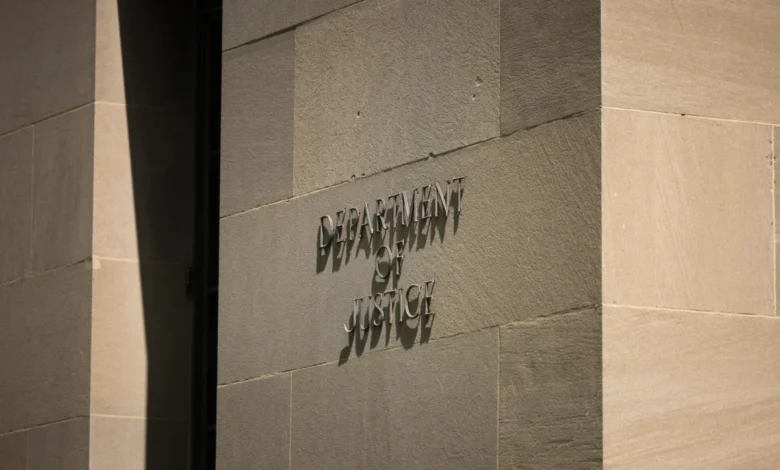
The landscape of American media consolidation reached a significant inflection point this week as the U.S. Department of Justice (DOJ) and a coalition of state attorneys general arrived at a tenuous resolution regarding the $111 billion merger between Paramount and Warner Bros. Discovery. While the agreement allows the massive transaction to proceed, it has exposed a growing philosophical divide between federal regulators—who are increasingly prioritizing market speed and corporate autonomy—and state-level enforcers who argue that behavioral guardrails are essential to protect domestic production and consumer choice.
Associate Attorney General Stanley Woodward issued a sharp statement on Tuesday, effectively downplaying the significance of the concessions extracted by the state coalition. By characterizing the settlement’s requirements as mere formalizations of existing company promises, the DOJ signaled that it considers the merger’s initial approval in June to be the final word on the matter, regardless of the subsequent legal challenges brought by the states.
A Chronology of the $111 Billion Deal
The path to this week’s settlement was fraught with regulatory hurdles and high-stakes legal maneuvering. The merger, which promises to reshape the streaming and theatrical landscape, was initially greenlit by the DOJ in June without a single divestiture requirement. This "clean" approval sparked immediate backlash from industry observers and legal experts who questioned whether the DOJ had conducted a sufficiently rigorous antitrust review.
In July, a coalition of 12 state attorneys general, led by California’s Rob Bonta, launched an antitrust lawsuit to halt the transaction. The states argued that the combination of two of Hollywood’s most storied legacy studios would stifle competition, reduce the number of films produced domestically, and concentrate too much power over the distribution of cable and theatrical content.
As the litigation proceeded through the autumn, the pressure mounted on both sides. Paramount faced a ticking clock: the merger agreement included a $7 million-per-day penalty for every day the deal remained unclosed past September 30. Last week, the DOJ intervened in the states’ lawsuit, filing a motion to force the attorneys general to post a $1.88 billion bond, a tactic designed to discourage the state-led delay. The threat of an expensive trial scheduled for March 2025 ultimately forced the hand of the parties, leading to the settlement announcement on Monday.
Analyzing the Settlement Terms
The terms of the settlement, which will remain in effect for a five-year duration, represent a compromise between the state plaintiffs’ desire for structural divestitures and the DOJ’s hands-off approach. Key provisions include:
- Production Volume Requirements: Paramount has committed to releasing a minimum of 30 films annually during the first two years of the agreement, increasing that volume to 32 films annually for the third, fourth, and fifth years.
- Theatrical Windows: The company must maintain a theatrical release window of at least 45 days, ensuring that major releases have a designated period of exclusivity in cinemas before moving to streaming or home video platforms.
- Domestic Investment: Paramount has agreed to increase its domestic film production spending by $300 million annually, a clause specifically intended to bolster the industry in Southern California.
- Independent Negotiation: The settlement mandates that the merged entity must conduct cable channel negotiations for the Paramount and Warner Bros. Discovery portfolios independently, preventing the new conglomerate from using its combined scale to bully distributors during carriage fee disputes.
- Oversight and Enforcement: An independent monitor will be appointed to oversee compliance with these behavioral conditions. Furthermore, the decree includes "teeth" in the form of potential asset sales—specifically of Miramax and select cable channels—should the company fail to meet the stipulated requirements.
The Clash of Regulatory Philosophies
The dissonance between the DOJ and the state attorneys general highlights a broader debate regarding the role of government in an era of corporate consolidation. Associate Attorney General Stanley Woodward’s statement reflected the current DOJ administration’s emphasis on economic efficiency. "Consumers benefit when transactions close quickly after federal enforcers have concluded a substantive review," Woodward noted. He further emphasized that under President Trump’s leadership, the department’s priority remains on "affordability for all Americans," suggesting that the government views the merger as a vehicle for stabilizing the struggling media sector rather than a threat to competition.
Conversely, California Attorney General Rob Bonta has framed the settlement as a victory for the American workforce. During Monday’s press conference, Bonta repeatedly emphasized that the deal is an "enforceable commitment" that safeguards jobs in Hollywood. For Bonta and his colleagues, the inclusion of an independent monitor and the threat of forced divestitures were critical wins in an environment where large-scale media mergers often result in layoffs and production cutbacks.
However, industry analysts suggest that the state-level victory is largely symbolic. By accepting behavioral remedies—which are notoriously difficult and expensive to police—the states have moved away from their initial, more aggressive demand for structural remedies like the sale of core assets.
Market Implications and Future Outlook
The merger is set to create a media powerhouse with an unprecedented library of intellectual property. However, the success of the combined entity will depend on its ability to navigate the shifting economics of the entertainment industry. The commitment to release 30 to 32 films per year is an ambitious target in an era where studios have been increasingly risk-averse, opting for fewer, larger-budget "event" films.
Furthermore, the requirement to negotiate cable carriage fees independently for the two companies is a structural hurdle that may prevent the merged firm from realizing the full synergy benefits initially promised to shareholders. The $300 million annual investment in domestic production is also a variable that will test the profitability of the company’s film slate.
The appointment of an independent monitor will introduce a layer of bureaucratic friction that is uncommon in private-sector mergers. If the monitor finds that Paramount is falling short of its film output goals or its domestic spending requirements, the threat of selling off assets like Miramax could create significant volatility for the company’s long-term strategic plans.
The Broader Antitrust Landscape
This case serves as a microcosm of a larger trend in American antitrust law. For years, the federal government held a near-monopoly on high-level merger reviews. Now, state attorneys general are increasingly asserting their own authority, acting as a "second layer" of scrutiny that can catch nuances that federal enforcers might ignore.
This dynamic creates uncertainty for multinational corporations. When a company must satisfy both federal regulators—who may be looking for speed and market efficiency—and state regulators—who may be looking for job protection and local economic impact—the cost of M&A (mergers and acquisitions) increases.
As the Paramount-Warner Bros. Discovery merger moves toward final integration, the focus will shift to whether these "behavioral guardrails" actually work. If the company thrives while meeting these requirements, it may serve as a template for future media deals. However, if the requirements prove to be a drag on growth, or if the company finds loopholes to circumvent the independent monitor, the calls for a return to strict, structural antitrust enforcement—requiring the actual breakup of companies—are likely to grow louder in the halls of state capitols and federal courtrooms alike.
Ultimately, the settlement is a testament to the fact that while the DOJ may have the final say on whether a deal can proceed, it no longer has the final say on the terms of the corporate marriage. The influence of state-level oversight has firmly established itself as a permanent feature of the modern regulatory landscape, ensuring that even as the DOJ attempts to prioritize market speed, the concerns of local economies and labor markets remain part of the public record.
Related posts: