Marriott CEO Anthony Capuano Leads Hotel Executive Pay in 2025 with $39.5 Million, Outpacing Rivals Amid Shifting Performance Metrics

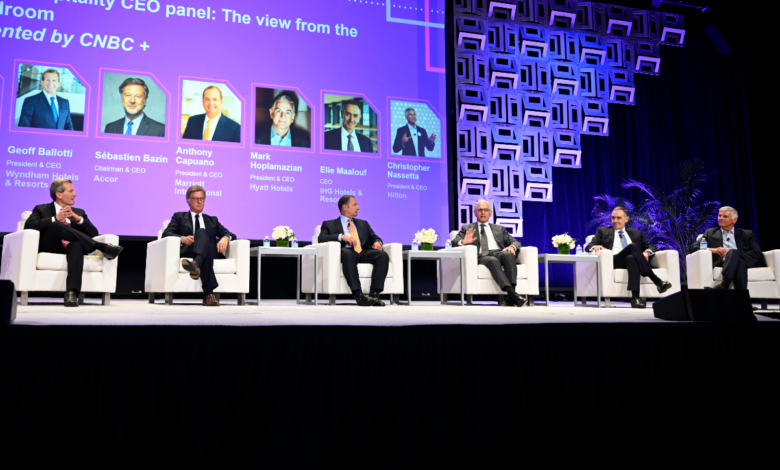
The landscape of executive compensation within the hospitality industry has seen a significant shift in 2025, with Marriott International CEO Anthony Capuano emerging as the highest earner, receiving a total compensation package valued at $39.5 million. This figure surpasses the reported earnings of the chief executives at major competitors including Accor, Choice Hotels International, Hilton Worldwide, Hyatt Hotels Corporation, InterContinental Hotels Group (IHG), and Wyndham Hotels & Resorts. The revelation, drawn from annual regulatory filings, offers a stark contrast to previous years where Hilton CEO Christopher Nassetta consistently topped the executive pay charts. This reversal in leadership, however, is attributed not to a sudden surge in board generosity across the sector, but rather to the fluctuating performance of company stock portfolios at the close of the fiscal year, highlighting the intricate interplay between executive rewards and market valuations.
A Closer Look at Executive Compensation in 2025
While the aggregate sum of $138 million distributed among the seven hotel chiefs might seem substantial, it serves as a headline figure that, in isolation, can be misleading. A more granular examination of how each board defines and incentivizes success for its chief executive reveals a more nuanced narrative. The compensation packages are not merely reflections of overall company performance, but rather indicators of the strategic priorities that each board expects its leadership to pursue.
At Marriott, the substantial payout to Capuano signals a board that prioritizes growth in market presence and customer loyalty. The compensation structure appears to reward the expansion of the Marriott portfolio through property acquisition and development, as well as the cultivation of its extensive loyalty program. This focus suggests a strategy geared towards long-term market share dominance and brand ubiquitousness, even if it means a potential trade-off with immediate margin maximization.
Conversely, Hyatt Hotels Corporation’s compensation design for its CEO appears to embed a strong disincentive for abrupt departures or a shift in strategic direction. The structure is reportedly designed to impose significant financial penalties should the CEO choose to leave the company prematurely, suggesting a board deeply invested in continuity and the long-term execution of its current strategic roadmap. This approach aims to ensure leadership stability and commitment to initiatives that may require extended periods to yield their full benefits.
In a notable departure from the norm, Wyndham Hotels & Resorts CEO reportedly declined his own bonus. This decision, while not directly quantified in terms of monetary value in the provided excerpt, speaks volumes about the CEO’s perception of the company’s performance or his confidence in its future trajectory. It could indicate a belief that the company’s results did not warrant additional performance-based compensation, or a personal commitment to shareholder value that transcends immediate bonus payouts. This act of self-restraint, if indeed accurate, offers a compelling case study in executive leadership and accountability.
The Shifting Dynamics of Executive Pay
The reported figures for 2025 highlight a dynamic where the "compensation actually paid" is heavily influenced by performance-based incentives, particularly those tied to stock performance. In prior years, Hilton’s Christopher Nassetta held the top spot, a testament to Hilton’s robust stock performance and a compensation structure that effectively rewarded such gains. The shift in leadership at the pinnacle of executive pay in 2025 suggests a period of recalibration for many hospitality giants, with boards re-evaluating how best to motivate their CEOs in an ever-evolving global market.
The divergence in compensation philosophies among the leading hotel groups underscores a fundamental difference in strategic priorities and risk appetites. While some boards might lean towards aggressive expansion and market penetration, as seemingly indicated by Marriott’s approach, others may prioritize operational efficiency, profitability, or the long-term stability of the organization. This variety in executive pay structures offers a window into the distinct strategic visions guiding these global hospitality behemoths.
Background and Context: The Post-Pandemic Hospitality Recovery
The year 2025 falls within a period of significant recovery and adaptation for the global hospitality sector following the unprecedented disruptions of the COVID-19 pandemic. The industry has been navigating a complex environment characterized by resurgent travel demand, evolving consumer preferences, and persistent economic uncertainties. Executive compensation in this context is often a reflection of the board’s confidence in the CEO’s ability to steer the company through these challenges and capitalize on emerging opportunities.
The pandemic forced a reassessment of business models, with a greater emphasis placed on resilience, digital transformation, and personalized guest experiences. Executive compensation packages have increasingly incorporated metrics related to these areas, alongside traditional financial performance indicators. The reported compensation figures for 2025 likely reflect a combination of base salary, short-term incentives tied to annual performance, and long-term incentives, often in the form of stock options and restricted stock units, whose value is directly tied to the company’s stock price.
Supporting Data and Industry Trends
To contextualize the $39.5 million compensation for Marriott’s CEO, it is beneficial to examine broader trends in executive pay within the hospitality industry and the broader S&P 500. While the exact figures for all competitors are not fully detailed in the provided excerpt, industry reports from compensation consulting firms often show significant variations based on company size, market capitalization, and geographic footprint.
For instance, a study by Equilar for 2023 (the most recent readily available comprehensive data) indicated that the median CEO compensation for S&P 500 companies was approximately $13.7 million. The figures reported for hotel CEOs in 2025, particularly the top earners, significantly exceed this median, underscoring the substantial rewards associated with leading global hospitality corporations.
The performance of the hotel sector in 2025 has been generally strong, driven by robust leisure travel and a gradual return of business travel. Occupancy rates have climbed, and average daily rates (ADRs) have increased in many markets, leading to improved revenue per available room (RevPAR) for most major hotel chains. This positive operational environment would naturally contribute to stronger financial performance and, consequently, higher incentive payouts for executives.
However, the dependence on stock performance for a significant portion of executive compensation means that even in a strong operational year, the actual "realized pay" can fluctuate. The "compensation actually paid" metric, which is what the excerpt focuses on, is crucial because it reflects the value of awards realized by executives, including the value of stock options exercised and the appreciation of vested stock. This is distinct from "reported pay" or "grant date fair value," which can be higher but may not be fully realized by the executive.
Strategic Implications of Divergent Compensation Philosophies
The distinct approaches to executive compensation adopted by Marriott, Hyatt, and Wyndham offer valuable insights into their respective strategic priorities:
-
Marriott’s Growth-Centric Approach: The emphasis on "planting flags and signing loyalty members" suggests a strategy focused on expanding global reach and strengthening brand loyalty. This approach is often associated with long-term value creation through market share gains and recurring revenue streams from loyal customers. The implication is that Marriott’s board believes this strategy will yield superior returns over time, justifying a compensation structure that rewards aggressive expansion. This could involve significant investment in new property development, acquisitions, and marketing initiatives aimed at attracting and retaining guests within the Marriott ecosystem. The success of this strategy hinges on effectively integrating new properties, maintaining brand standards across a diverse portfolio, and continuing to innovate within its loyalty program to stay ahead of competitors.
-
Hyatt’s Continuity and Commitment Focus: Hyatt’s strategy of making it financially costly for its CEO to leave suggests a board that highly values leadership stability and the uninterrupted execution of its strategic plan. This could be particularly relevant if Hyatt is engaged in long-term transformative projects or has recently implemented a significant strategic shift. The implication is that the board believes the current leadership is best positioned to navigate the company through its current phase of development, and any disruption in leadership could derail progress. This compensation design aims to ensure that the CEO remains committed to achieving the long-term objectives that the board has set. It might also indicate a board that perceives a high level of risk associated with leadership transitions in the current market environment.
-
Wyndham’s Accountability and Performance Alignment: The reported instance of Wyndham’s CEO declining his bonus, if accurate, sends a powerful message about accountability and a potential alignment with shareholder sentiment or a perceived need for greater cost discipline. This could stem from various factors, including internal performance shortfalls, broader economic headwinds impacting the company’s segment, or a desire to set a precedent for fiscal prudence. The implication is that the CEO either believes the company’s performance did not meet the threshold for additional compensation or is making a strategic statement about financial responsibility. Such a move, while rare, can enhance a CEO’s reputation for integrity and focus on long-term value creation rather than immediate personal gain. It could also signal a board that is closely monitoring performance and holding management to stringent standards.
Official Responses and Stakeholder Perspectives
While direct quotes from the boards or CEOs involved were not provided in the initial excerpt, one can infer the likely rationale behind these compensation decisions. Boards typically justify executive pay through detailed proxy statements, outlining the performance metrics, peer group comparisons, and strategic objectives that underpin their decisions.
For Marriott, the board would likely articulate that Capuano’s compensation reflects his leadership in driving Marriott’s global growth strategy, expanding its brand footprint, and enhancing its loyalty program, which are key drivers of long-term shareholder value. They would likely point to metrics such as system-wide RevPAR growth, net room growth, and loyalty program engagement as justifications for the payout.
Hyatt’s board might emphasize the long-term nature of their strategic initiatives and the importance of leadership continuity. They would likely highlight metrics related to the successful integration of acquisitions, the development of new brands or market segments, and improvements in operational efficiency that are expected to mature over several years.
Wyndham’s decision, if it indeed involved the CEO declining a bonus, would likely be presented as an act of strong leadership and commitment to shareholder interests, particularly if the company faced any performance challenges or economic uncertainties. The board might commend the CEO’s decision as a demonstration of his dedication to the company’s financial health and long-term success.
Investors, while often scrutinizing executive compensation, generally understand that significant rewards are often tied to significant performance and leadership responsibilities. However, they also expect transparency and a clear link between pay and demonstrable value creation. The "compensation actually paid" metric is particularly important to investors as it reflects the realized value of executive incentives, providing a more tangible measure of how effectively executives are being rewarded for their contributions.
Broader Impact and Future Outlook
The varied compensation strategies among leading hotel CEOs in 2025 underscore a dynamic and competitive industry where leadership effectiveness is paramount. The differing approaches to incentivizing CEOs signal diverse strategic priorities, from aggressive global expansion to a strong emphasis on continuity and accountability.
This analysis of executive compensation offers a valuable lens through which to understand the strategic imperatives and leadership philosophies of major players in the hospitality sector. As the industry continues to evolve, driven by technological advancements, changing consumer behaviors, and global economic shifts, the ways in which executive success is defined and rewarded will undoubtedly continue to adapt. The focus on metrics beyond traditional financial performance, such as guest satisfaction, sustainability, and employee engagement, is likely to become increasingly prominent in shaping future executive compensation packages. The year 2025 serves as a compelling snapshot of these evolving dynamics, highlighting that while the pursuit of profit remains central, the pathways to achieving it, and the rewards for those who lead the charge, are becoming increasingly multifaceted.