The Evolution of Modern Growth: Understanding the Shift from Traditional Funnels to AI-Driven Loop Marketing

The global marketing landscape has undergone a more radical transformation in the last 36 months than in the preceding half-century, according to recent industry data. As the calendar turns toward 2026, the industry is witnessing a fundamental decoupling from the traditional linear marketing funnel in favor of "Loop Marketing." This shift represents a move away from static, broad-reach campaigns toward continuous, AI-driven systems designed to navigate a world defined by fragmented search, zero-click results, and generative AI discovery.
While traditional marketing treats the customer journey as a straight path from awareness to purchase, Loop Marketing operates as a cyclical, self-improving ecosystem. This new framework, championed by industry leaders including HubSpot, is designed to solve the growing crisis of "funnel decay," where traditional tactics—such as standard SEO and broad-email blasts—are yielding diminishing returns in an increasingly automated digital environment.
The Breakdown of the Traditional Linear Model
For decades, the "AIDA" model (Awareness, Interest, Desire, Action) served as the bedrock of marketing strategy. This linear progression assumed that brands could control the flow of information, leading a prospect through a predictable series of gates until a transaction occurred. However, recent consumer behavior data suggests this model is no longer compatible with the modern digital reality.
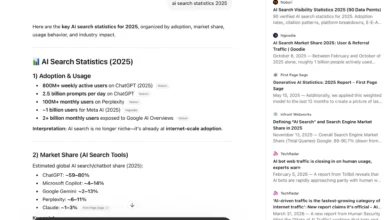
Research from Bain & Company reveals that approximately 60% of Google searches now end without a single click to a third-party website. This phenomenon, known as "zero-click search," is driven by AI-generated summaries and chatbots that provide instant answers directly on the search results page. Furthermore, nearly 80% of search users now rely on AI summaries at least 40% of the time. In this environment, the brand’s website—once the primary destination for the "Attract" phase—is frequently bypassed.
The traditional funnel also struggles with the fragmentation of attention. Today’s buyer journey is erratic, jumping between social platforms like TikTok and YouTube, private communities, and AI interfaces like ChatGPT or Claude. By the time a prospect actually engages with a brand’s owned assets, they are often more educated and have higher intent than in previous eras, rendering traditional "top-of-funnel" awareness tactics obsolete or redundant.
The Chronology of Marketing Frameworks
To understand the rise of Loop Marketing, one must look at the evolution of the discipline over the last two decades:
- The Era of Outbound (Pre-2006): Dominated by "push" tactics such as television ads, cold calling, and direct mail. The brand held the megaphone, and the consumer was a passive recipient.
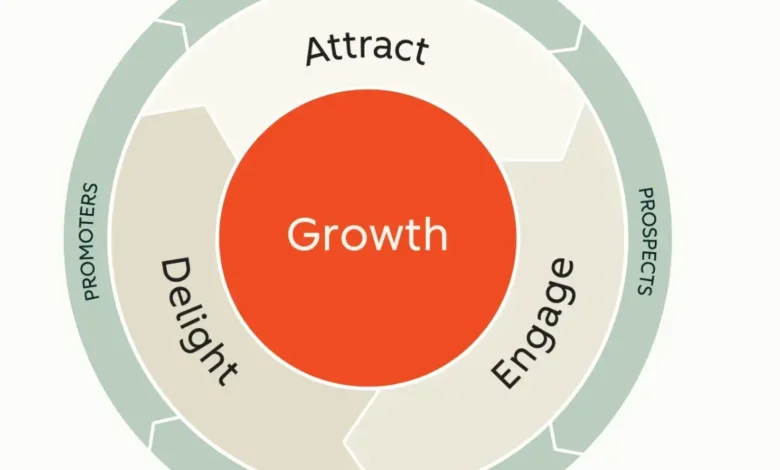
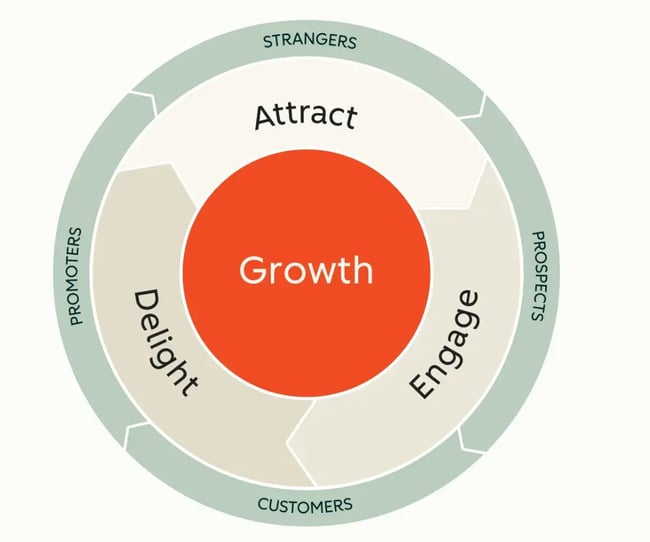
- The Inbound Revolution (2006–2018): Pioneered by HubSpot, this era focused on "pull" tactics. Brands created blogs, eBooks, and SEO content to attract customers who were actively searching for solutions. The "Flywheel" was introduced during this period to emphasize customer delight and retention.
- The AI Disruption (2023–Present): The emergence of Large Language Models (LLMs) and generative search changed how content is consumed and produced. Marketing shifted from managing channels to managing data and AI-generated brand perceptions.
- The Rise of Loop Marketing (2025–2026): This current stage integrates AI into the core of the strategy, moving from human-managed campaigns to AI-orchestrated systems that adapt in real-time.
The Four Pillars of the Loop Marketing Framework
Loop Marketing is structured around four continuous stages: Express, Tailor, Amplify, and Evolve. Unlike the funnel, these stages do not have a definitive end point; rather, the data from the final stage feeds directly back into the first, creating a compounding growth effect.
1. Express: Defining the Brand for the Machine Era
In the traditional model, brand identity was documented in static PDFs for human employees. In Loop Marketing, the "Express" stage involves translating brand voice, values, and ideal customer profiles (ICPs) into rich documentation designed to train AI models. This ensures that when AI tools generate content or interact with customers, they do so with a consistent "brand soul." This stage focuses on building a centralized library of messaging that serves as the "source of truth" for all automated systems.
2. Tailor: Hyper-Personalization at Scale
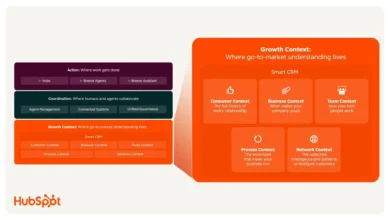
The "Tailor" stage replaces broad segmentation with dynamic, individualized journeys. Traditionally, a marketer might create three versions of an email for three different personas. In the Loop model, AI utilizes real-time behavioral and contextual data from a CRM to generate hundreds or even thousands of variations. This ensures that the messaging resonates with the specific pain points and intent of each individual lead, moving beyond simple "first name" tokens to deep contextual relevance.
3. Amplify: Answer Engine Optimization (AEO)
The "Amplify" stage acknowledges that brands no longer own the conversation. Instead of focusing solely on driving traffic to a website, marketers now focus on "Answer Engine Optimization" (AEO). This involves structuring content so it can be easily parsed and cited by AI chatbots and search summaries. The goal is to ensure the brand is the "answer" provided by AI, regardless of where the user is searching. This stage also leverages AI to repurpose high-performing content into multiple formats—such as turning a long-form report into a series of short-form videos—maximizing reach across fragmented channels.
4. Evolve: Real-Time Strategy Optimization
The final stage, "Evolve," closes the loop. In the traditional funnel, performance reports are often retrospective, analyzed weeks after a campaign concludes. In Loop Marketing, AI monitors performance in real-time, running rapid experiments and automatically adjusting tactics. This stage transforms marketing from a series of "bets" into a continuous learning machine where every interaction provides data to refine the Express and Tailor phases.

Comparative Analysis: Loop vs. Funnel
| Dimension | Traditional Funnel | Loop Marketing |
|---|---|---|
| Core Model | Linear (Start to Finish) | Cyclical (Continuous) |
| Personalization | Broad Segments/Personas | Individualized/Contextual |
| Primary Goal | Traffic and Lead Volume | Engagement and Brand Presence |
| Data Usage | Static Reporting | Real-Time Optimization |
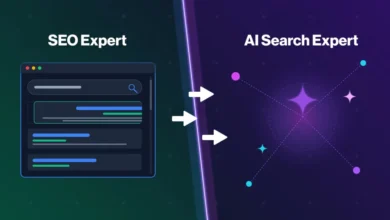
| Search Strategy | SEO (Links/Keywords) | AEO (Answers/Citations) |
| Cadence | Periodic Campaigns | Always-On Systems |
| AI Role | Task Assistant | Strategic Orchestrator |
Implementation and Strategic Transition
Transitioning to a Loop Marketing model does not require a total abandonment of existing inbound principles, but it does require a significant upgrade in technical infrastructure. Industry experts suggest a five-step transition plan:
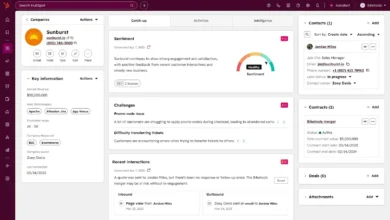
First, organizations must unify and clean their data. Loop Marketing relies entirely on the quality of the CRM. If customer data is siloed or inaccurate, the AI cannot effectively tailor messaging or evolve strategies.
Second, teams should identify "funnel leaks"—specific areas where traditional tactics are failing, such as low conversion rates on generic landing pages. These leaks serve as the ideal starting point for implementing the first "loop."
Third, brands must move from "human-only" content creation to "human-in-the-loop" systems. This involves using AI to handle the heavy lifting of production while maintaining human oversight to ensure brand alignment and emotional resonance.
Fourth, there is a necessary shift in goal setting. Rather than just tracking "clicks," teams should begin tracking "brand mentions" in AI summaries and "sentiment scores" across decentralized platforms.
Finally, small wins are prioritized over massive overhauls. By automating a single sequence—such as an AI-driven post-download follow-up—teams can demonstrate the efficacy of the loop before scaling it across the entire department.
Broader Impact and Industry Implications
The move toward Loop Marketing has profound implications for the professional roles within the industry. The demand for traditional "content executors" is expected to decrease, while the need for "AI Orchestrators" and "Data Strategists" will rise. Marketers will spend less time on the mechanics of distribution and more time on the strategic "Express" phase—defining the unique brand insights that AI cannot replicate.
Furthermore, the competitive gap is expected to widen between "Loop-ready" companies and those clinging to the traditional funnel. Organizations that successfully implement self-improving marketing systems will benefit from compounding returns: as their AI learns more about their customers, their marketing becomes more efficient, freeing up resources for further innovation.
In conclusion, Loop Marketing is not merely a new set of tactics but a fundamental shift in the philosophy of growth. As the digital landscape becomes more complex and AI-dependent, the ability to build a system that learns and adapts in real-time will be the primary differentiator for brands in 2026 and beyond. The funnel is not dead, but it has evolved into a circle—one that rewards those who can harness data to drive continuous, automated excellence.