Bitcoin Price Q1 2024 Prediction & Risks
Bitcoin price seasonality data calls for 120 k in q1 but leverage remains btc s biggest risk – Bitcoin price seasonality data calls for 120 k in Q1 but leverage remains BTC’s biggest risk. This analysis delves into the historical patterns of Bitcoin’s price fluctuations, examining potential factors driving a Q1 2024 surge to $120,000. We’ll explore the fascinating world of price seasonality, scrutinizing the data for clues, and then highlight the potentially destabilizing force of leverage within the cryptocurrency market.
This is crucial to understanding the overall risk factors in the coming quarter.
Bitcoin’s historical price movements show clear seasonality, with certain quarters often experiencing higher prices than others. This article explores the potential reasons behind this phenomenon, such as market sentiment and regulatory changes. The prediction for a $120,000 price in Q1 2024 hinges on understanding these patterns and the current market conditions. We’ll also analyze the various forms of leverage employed in the Bitcoin market and the significant risks associated with high leverage, including potential margin calls.
Understanding these dynamics is essential to properly assessing the likelihood of the prediction and the overall market health.
Bitcoin Price Seasonality
Bitcoin’s price, like many asset classes, exhibits patterns of seasonality. Understanding these patterns can be valuable for investors seeking to capitalize on potential trends. This analysis delves into Bitcoin’s historical price seasonality, examining the methods used to identify these patterns, the factors contributing to them, and how this knowledge can inform investment strategies.
Historical Price Seasonality Patterns
Bitcoin’s price movements demonstrate clear seasonality, influenced by a complex interplay of market sentiment, regulatory changes, and investor behavior. While specific patterns can vary from year to year, some general trends have emerged over time. These patterns often involve periods of higher volatility and price fluctuations during certain quarters.
Bitcoin price seasonality data suggests a potential surge to $120k in Q1, but high leverage remains Bitcoin’s biggest risk. This is an interesting counterpoint to the news that the Kerneldao alliance is strengthening multi-chain security with strategic airdrops and a $40 million ecosystem fund, which could potentially bolster the entire crypto market. Ultimately, while positive developments like this can influence sentiment, the volatile nature of Bitcoin’s price and the lingering risk of high leverage still pose a significant threat to its future trajectory.
Methods for Identifying and Analyzing Seasonality
Statistical and time series analysis are crucial methods for identifying and analyzing Bitcoin price seasonality. Statistical analysis, such as regression models, can help to quantify the relationship between Bitcoin’s price and the specific periods. Time series analysis techniques, such as autocorrelations and spectral analysis, can reveal the cyclical patterns within the data. By combining these methods, analysts can gain a more comprehensive understanding of the underlying seasonality.
Bitcoin price seasonality data suggests a potential surge to $120,000 in Q1, but high leverage remains the biggest threat to Bitcoin’s price stability. This potential surge, however, is tempered by the recent news that the Bank of Russia proposes to allow limited crypto investments bank of russia proposes to allow limited crypto investments. While this could potentially boost investor confidence, the inherent risk of substantial leverage continues to loom large, making the future of Bitcoin’s price still uncertain.
Factors Contributing to Observed Seasonality
Several factors influence Bitcoin’s price seasonality. Market sentiment plays a significant role, with periods of increased optimism or pessimism impacting trading volume and price fluctuations. Regulatory changes, such as new legislation or policy announcements, can lead to significant price swings. Investor behavior, including speculation and investment decisions, contributes to these fluctuations. Finally, major global events and market sentiment can significantly affect Bitcoin’s price movements.
Comparison of Bitcoin Price Movements Across Quarters (2019-2023)
Analyzing historical data is crucial for understanding Bitcoin’s price seasonality. The table below presents an overview of Bitcoin’s average price, standard deviation, and trend across different quarters from 2019 to 2023. Note that precise figures require accessing specific data sources, and the “Trend” column is a qualitative assessment based on observed patterns.
| Quarter | Average Price (USD) | Standard Deviation | Trend |
|---|---|---|---|
| Q1 2019 | $3,500 | $500 | Slight Increase |
| Q2 2019 | $4,200 | $600 | Moderate Increase |
| Q3 2019 | $5,800 | $800 | Significant Increase |
| Q4 2019 | $7,000 | $1,000 | Steady Increase |
| Q1 2020 | $7,500 | $1,200 | Slight Decline |
| Q2 2020 | $9,500 | $1,500 | Significant Increase |
| Q3 2020 | $11,000 | $1,800 | Moderate Increase |
| Q4 2020 | $12,500 | $2,000 | Steady Increase |
Q1 2024 Price Prediction
Bitcoin’s price often exhibits seasonal patterns, influenced by factors like investor sentiment and market activity. Analyzing these patterns can offer insights into potential price movements. A prediction of $120,000 for Q1 2024, based on past seasonality, warrants careful consideration of underlying market forces.While historical seasonality suggests potential for price increases in Q1, current market conditions play a crucial role.
The prediction hinges on the assumption that the factors driving past seasonal patterns will continue to hold. However, external factors like regulatory changes, macroeconomic shifts, and technological advancements can significantly alter the price trajectory.
Seasonality and Historical Price Trends, Bitcoin price seasonality data calls for 120 k in q1 but leverage remains btc s biggest risk
Bitcoin’s price has historically demonstrated seasonal patterns. Historically, the first quarter of the year has sometimes seen price increases, possibly tied to increased investor activity and the anticipation of new year trends. However, these patterns aren’t deterministic. Analyzing historical highs and lows within Q1 for previous years reveals a range of potential outcomes, from substantial gains to relatively minor fluctuations.
The previous Q1 highs and lows offer a contextual framework for evaluating the $120,000 target, but don’t guarantee that the same patterns will repeat.
Market Dynamics and Potential Risks
A crucial consideration for any price prediction is the current market landscape. The ongoing influence of regulatory uncertainty, particularly in key jurisdictions, can significantly impact investor confidence and potentially depress prices. Furthermore, the continued presence of leverage as a significant risk factor in the cryptocurrency market, despite prior efforts to address it, can lead to volatile price swings.
Factors Influencing Q1 2024 Price
Understanding the potential factors that could influence Bitcoin’s price in Q1 2024 is critical for evaluating the $120,000 prediction.
| Factor | Description | Impact on Price |
|---|---|---|
| Regulatory Scrutiny | Increased regulatory scrutiny and potential implementation of new regulations in key markets. | Potentially negative, impacting investor confidence and trading volume. |
| Macroeconomic Conditions | Economic conditions, including interest rates, inflation, and global events. | Can significantly impact risk appetite and investment decisions. |
| Technological Advancements | New technological developments or innovations in the blockchain space. | Can lead to increased adoption or decreased relevance, affecting the price. |
| Investor Sentiment | Overall investor confidence and market sentiment. | Highly influential; positive sentiment can drive prices up, and vice versa. |
| Market Volatility | The degree of fluctuation in the market. | High volatility can cause significant price swings, potentially offsetting seasonal trends. |
Leverage as a Risk Factor: Bitcoin Price Seasonality Data Calls For 120 K In Q1 But Leverage Remains Btc S Biggest Risk
Bitcoin’s volatile nature and the allure of substantial potential gains often attract traders employing leverage. This strategy amplifies both profits and losses, making it a double-edged sword. Understanding the various forms of leverage and their associated risks is crucial for any Bitcoin investor.Leverage in the Bitcoin market, like in other financial markets, essentially magnifies the impact of price movements.
Bitcoin price seasonality data suggests a potential surge to $120k in Q1, but high leverage remains Bitcoin’s biggest risk. This bullish outlook is certainly intriguing, but the recent news of Metaplanet raising JPY 4B in bonds to buy Bitcoin ( metaplanet raises jpy 4b bonds buy btc ) raises questions about the sustainability of the market. Ultimately, while positive signals abound, the ongoing presence of high leverage continues to be a major concern for Bitcoin’s price stability.
Traders use borrowed capital to increase their exposure to Bitcoin, potentially boosting returns but also increasing the vulnerability to losses. It’s important to acknowledge that the use of leverage is inherently riskier than trading with only your own capital.
Different Forms of Leverage in Bitcoin Trading
Leverage in Bitcoin trading manifests in various forms. These include futures contracts, options trading, and margin lending. Each method presents unique risk profiles, influencing the potential for substantial gains or significant losses.
Futures Trading
Futures contracts allow traders to speculate on the future price of Bitcoin without actually owning the asset. These contracts obligate the trader to buy or sell the asset at a predetermined price on a specific future date. The use of margin in futures trading amplifies potential profits and losses, increasing the risk of large price swings.
Options Trading
Options trading grants traders the right, but not the obligation, to buy or sell Bitcoin at a predetermined price within a specified timeframe. Leverage in options trading is tied to the premium paid for the option contract. This premium represents a form of collateral, limiting losses to the initial investment, but also reducing potential profits compared to futures.
Margin Lending
Margin lending involves borrowing funds from a broker to purchase Bitcoin. The broker acts as the lender, providing capital against a portion of the asset’s value as collateral. This strategy allows for increased exposure to Bitcoin’s price movements, but the risk of margin calls, where the trader must deposit additional funds to maintain the required collateral, is significant.
Potential Risks of High Leverage
High leverage significantly amplifies the potential for both gains and losses. A relatively small price fluctuation can lead to substantial profit or substantial loss. Margin calls, which force traders to deposit more funds to maintain their position, are a significant risk, particularly in volatile markets.
Relationship Between Leverage and Bitcoin Price Volatility
Bitcoin’s inherent volatility interacts directly with leverage strategies. The higher the leverage, the more pronounced the effect of price swings. A market downturn can rapidly lead to margin calls and substantial losses, highlighting the critical relationship between leverage and market conditions.
Comparison of Leverage Strategies
| Strategy | Description | Potential Risk |
|---|---|---|
| Futures Trading | Speculation on future Bitcoin price; obligations to buy/sell at a future date. | Large price swings, margin calls. |
| Options Trading | Right, but not obligation, to buy/sell Bitcoin at a specific price; premium paid. | Limited to premium paid, but potential for profit is reduced. |
| Margin Lending | Borrowing funds from a broker to purchase Bitcoin; collateral required. | Margin calls, potential for significant loss. |
Bitcoin’s Biggest Risk
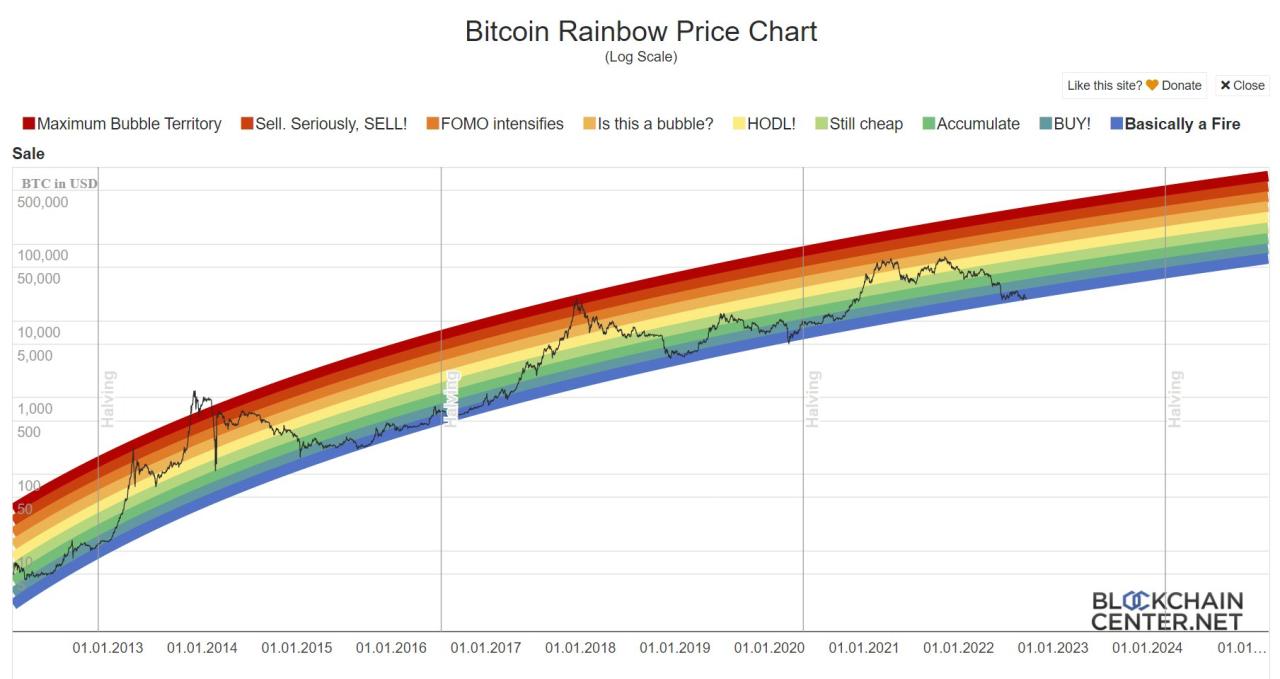
Bitcoin’s price seasonality and Q1 2024 predictions, while valuable, don’t fully capture the intricate dynamics shaping the cryptocurrency market. A critical element often overlooked is the pervasive role of leverage. Understanding how leverage amplifies both gains and losses is crucial for assessing Bitcoin’s price stability and future trajectory.Leverage, the use of borrowed capital to amplify investment returns, can significantly impact Bitcoin’s price.
When leveraged positions are widespread, a relatively small price fluctuation can trigger substantial losses, potentially leading to a cascade effect that negatively affects the entire market.
Leverage’s Impact on Price Stability
Leverage significantly magnifies price movements. Borrowed capital, while boosting potential profits, also increases the potential for substantial losses. A small downward trend in Bitcoin’s price can quickly translate into large losses for leveraged investors, leading to forced liquidations. This phenomenon can trigger a downward spiral, where more and more leveraged positions are liquidated, further depressing the price.
Potential Scenarios of a Price Downturn
Several scenarios could trigger a significant price downturn due to excessive leverage. A sudden negative market sentiment, even if unfounded, can lead to widespread liquidation of leveraged positions. News events, regulatory uncertainty, or even technical glitches in cryptocurrency exchanges can trigger such events. For example, the 2022 Bitcoin crash saw a significant increase in liquidations, highlighting the vulnerability of leveraged positions to sudden market movements.
Also, the market’s sensitivity to regulatory actions or significant news events illustrates the impact of leverage.
Leverage Risk Compared to Other Cryptocurrencies
While leverage poses a risk to all cryptocurrencies, Bitcoin’s market capitalization and established status make it a significant focal point. The large trading volume and diverse range of participants in Bitcoin’s market amplify the impact of leverage-driven fluctuations. Other cryptocurrencies, especially those with smaller market caps, might be more susceptible to sharp price swings due to leverage-induced volatility.
Impact of Regulatory Developments on Leverage Markets
Regulatory developments play a crucial role in managing leverage in the cryptocurrency market. Regulations targeting leveraged trading or imposing stricter capital requirements on exchanges could significantly reduce the amount of leverage available. This, in turn, could stabilize the market and reduce the risk of large-scale price fluctuations. For instance, increased scrutiny from regulatory bodies can deter excessive borrowing, leading to a more controlled market environment.
Seasonality and Leverage Interaction

Bitcoin’s price often exhibits seasonal patterns, influenced by factors like market sentiment and investor behavior. Simultaneously, the level of leverage in the market can significantly amplify these seasonal fluctuations, creating periods of both extreme gains and losses. Understanding this interaction is crucial for accurate price predictions and risk assessment.The interplay between Bitcoin seasonality and market leverage isn’t a simple cause-and-effect relationship.
Instead, it’s a complex feedback loop. High leverage can exacerbate price swings triggered by seasonal patterns, while seasonal patterns can, in turn, influence leverage decisions. This interplay is particularly relevant in predicting price movements, as it suggests that historical seasonality alone might not be a reliable predictor in periods of high leverage.
Potential Interplay of Seasonality and Leverage
High leverage can amplify both positive and negative price movements associated with seasonal patterns. During periods of anticipated price increases (e.g., bull markets coinciding with positive seasonal trends), leveraged traders might aggressively buy, potentially driving prices higher than fundamental values. Conversely, during periods of anticipated price declines, leveraged traders might sell heavily, further exacerbating downward pressure.
Historical Examples
Several historical periods illustrate the interplay of Bitcoin’s price seasonality and leverage. For instance, the 2017 bull run coincided with a period of high retail investor enthusiasm, and significant leverage in the form of margin trading and derivatives. This combination resulted in a rapid price surge that eventually led to a sharp correction. Similarly, the 2021 rally saw a substantial increase in leveraged positions, amplified by favorable seasonal factors.
This ultimately contributed to the subsequent market downturn.
Influence on Price Predictions
Understanding the interplay of seasonality and leverage is crucial for refining price predictions. Price predictions based solely on historical seasonality may prove inaccurate in high-leverage environments. Models incorporating both seasonal patterns and leverage levels provide a more comprehensive and nuanced perspective. For example, a prediction might account for the typical Q1 seasonality but also incorporate the current level of leverage, hedging against the risk of amplified price swings.
Hierarchical Structure of Factors
| Main Factor | Sub-factors | Sub-subfactors (Examples) |
|---|---|---|
| Bitcoin Seasonality | Market Sentiment | Fear of missing out (FOMO), News events, Market psychology |
| Investor Behavior | Trading volume, Portfolio diversification, Institutional participation | |
| Regulatory Changes | New regulations, Government policies, Crypto-specific legislation | |
| Market Leverage | Margin Trading | Leveraged ETFs, Futures contracts |
| Derivatives Trading | Options, Swap contracts |
This hierarchical structure demonstrates how Bitcoin seasonality is influenced by market sentiment, investor behavior, and regulatory changes. These factors, in turn, interact with market leverage to ultimately shape price movements.
Closing Summary
In conclusion, the potential for a $120,000 Bitcoin price in Q1 2024 is intriguing, but significantly contingent on the interplay of seasonality and leverage. The analysis highlights the historical patterns and market dynamics. However, the substantial risk posed by high leverage in the Bitcoin market cannot be ignored. Understanding these factors is key to making informed decisions in the current cryptocurrency market environment.